

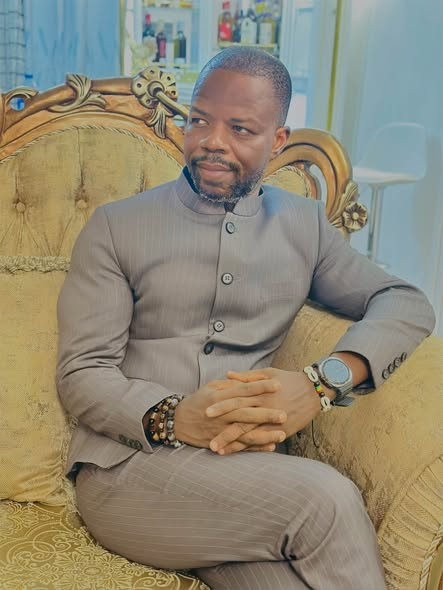
By Garrison Yealue (former representative, Nimba County)
Mountains do not lie, and neither will I. From the top of Mt. Yoohn, a man sees what the valley hides. Our fathers climbed this mountain not to look down on anyone, but to see the whole town at once: whose roof is leaking, whose farm is burning, whose child is crying.
This morning I climbed it again, and my heart grew heavy. What I see is a government that promised to rescue the town, moved into the chief’s house, and locked the door behind it. The cries of the valley do not reach the mansion, and the mansion has stopped listening for them. A nation without gratitude eats its own pillars. Some people in this Republic spend their days discrediting genuine sacrifice and patriotism, as though envy were a development plan and slander a national budget.
But grace is not transferable. No one becomes another man by pulling him down. As the Dan elders say, you do not know the weight the pillar carried until the roof is on your head. Chief Wotoe Mongrue put it plainly: the palm tree does not grow taller because you cut its neighbor.
Half-truths have buried too many of us, so let us tell the whole truth. We condemn the war, and we condemn it without stammering. We buried too many sons and daughters to romanticise it. But honest history does not begin on December 24, 1989. It begins with the blood of April 1980, the tribal hegemony that followed, and the broad-daylight theft of the October 1985 election, after which Nimba was made to bleed.
Those who curse the fire must also curse the hand that piled the dry grass. King Sao Boso settled quarrels between settler and native at Bopolu long before there was a Republic, and his people knew that peace is kept by justice, not by speeches. We are all Liberians. No one is more Liberian than another.
Ask the market woman whether she has been rescued. She will show you her empty pot. In early March, a gallon of gasoline sold for US$4.02 and a gallon of fuel oil for US$4.33. Today gasoline sells for US$5.58 and fuel oil for US$6.58. That is a rise of nearly 40 percent at the pump and more than 50 percent for the fuel that moves our taxis, trucks and market goods. And we are told to take our complaints to the Middle East.
The tax collector has been busier than the rescuer. The goods and services tax has crept from 10 to 13 percent, and on January 1, 2027, the date the Finance Minister himself calls “the magic date,” a 15 percent VAT arrives. Let no one be fooled: the trader only collects VAT, and the market woman’s customer pays it. Lawmakers passed roughly US$1.25 billion for 2026, and now US$1.54 billion is proposed for 2027, yet the people’s pots grow lighter. Grandma Kemah Souhlue had a name for this: monkey work, baboon draw. If this is rescue, kindly return us to the water.
Where hardship was not enough, they sent the bulldozer. From Saye Town to the old barracks at Camp Ramrod, citizens have watched their homes flattened in plain view, with women and children sleeping in the open, and they are expected to clap. We will not clap for the machine that buried our children’s school uniforms under the rubble.
A government that bulldozes its people is building its own wilderness. Chief Gbehzongar of Bassa warns that when the chief destroys the huts of his own villagers, he will soon rule over a forest of ghosts. The Kissi of Chief Tamba Taylor say the stool is borrowed and the land owns it. The power this government holds is borrowed from the Liberian people, and borrowed things are returned.
Now to the loose talk of arresting former President George Manneh Weah. Handcuffs are not a substitute for a record of achievement. I ask respectfully: have they read the Constitution with comprehension, or are they wandering in wonderland?
Article 61 of the 1986 Constitution shields the President from suits, arrest and detention for any act done while President under the Constitution and the laws of the Republic. Its intent is twofold and wise. First, a President must be able to govern without fear that every lawful decision will be dragged into court by a vengeful successor. Otherwise, every transfer of power becomes a manhunt.
Words in a Constitution are not decorations; everyone was chosen. Article 61 says the President is not immune from prosecution “upon removal from office” for crimes committed while President. Removal and leaving office are not the same thing. Removal is the involuntary, premature ending of a mandate by a constitutional authority, as a sanction for wrongdoing.
Under Articles 43 and 62, that means impeachment by the House of Representatives and conviction by two-thirds of the Senate for treason, bribery, other infamous crimes, misconduct, violation of the Constitution or gross breach of duty. Removal is a verdict.
Leaving office is something else entirely. It is the natural end of a mandate through expiry of the term, defeat at the polls, resignation or death, with no finding of fault and no punishment attached. George Weah was never impeached and never removed. He left office the honourable way: he lost an election, conceded, and handed over power in peace. The framers wrote “removal,” not “leaving,” and they knew the difference.
At the very least, the Constitution expects any claim of presidential crime to be tested by the people’s representatives through impeachment, not invented by political opponents after the fact. The government says it has no plan to arrest him. If so, let the loose talk stop. If not, show the crime. A candidacy in 2029 is not a crime.
Before you borrow a foreign precedent, read it to the last page. Those who cite Donald Trump should finish the story. His New York conviction concerned hush-money payments made during his 2016 campaign and the business records that concealed them. That was private conduct, not official acts.
In Trump v. United States (2024), the U.S. Supreme Court held that a former President is immune for official acts and not immune for unofficial ones. That is the logic of Article 61 exactly. The Kpelle of Madam Suakoko’s county would say: before you borrow your neighbour’s drum, learn the dance it was carved for.
Measure the man they daydream of handcuffing. In 1995 he carried Liberia’s name to the summit of world football, the only African ever named FIFA World Player of the Year. A barefoot boy from Clara Town became the pride of a continent.
In 2023 he did what many in power today could not imagine: he conceded before the final results were declared and handed over power peacefully. No court has convicted him of any crime. Yet the self-declared rescuers now want him as an escape route from their own failure. The Kru, heirs of Juah Nimley’s stubborn courage, would warn that the canoe does not sink because of the man standing on the shore.
Mr. President, hear this from a friend of the Republic, not an enemy of your house. Those pushing you to break our hard-earned peace are not your friends. Peace in Liberia was bought with graves, and it cannot be gambled for political revenge.
When things go wrong, those advisers will not stand beside you. They will disappear into the crowd, point their fingers at you and your family alone, and leave you to answer to history by yourself.
So hear this from the mountain, respectfully and without fear. We will challenge every oppressive act within the bounds of our democracy: by voice, by law, and where necessary by peaceful democratic resistance. We will not surrender the economic interests, the freedoms, or the votes of the Liberian people.
The thatch may blow away, but the pillars stand. Oldman Weah would say that the strength of the roof is not in the thatch but in the pillars that hold it up. Liberia’s pillars are its ordinary citizens, its Constitution and its democratic spirit, not the passing power of an insensitive executive. Presidents come and presidents go. Liberia remains.

