

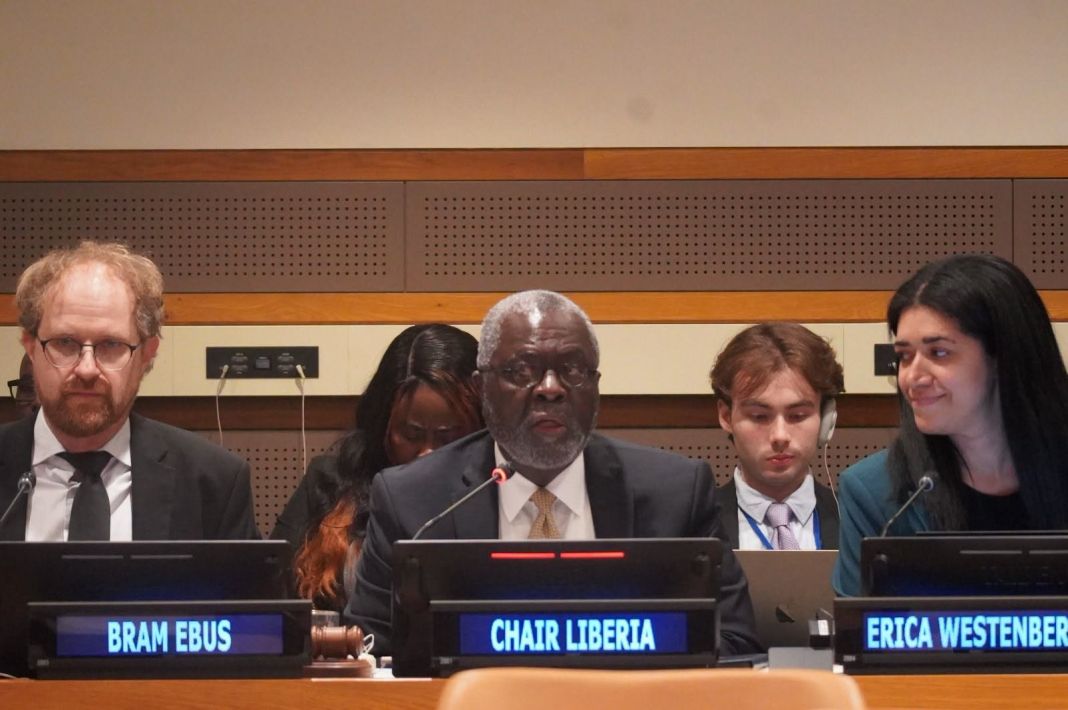
Liberia has renewed its call for stronger international cooperation to prevent the exploitation of natural resources from fueling armed conflicts, illicit financial flows, and regional instability, using a high-level United Nations forum to advocate for resource governance that promotes peace and sustainable development.
The appeal came during an Arria-formula meeting convened Wednesday at United Nations Headquarters in New York under the theme, “Natural Resources and Conflict: Strengthening Cooperation for Prevention and Peace.” The meeting was organized by Liberia’s Permanent Mission to the United Nations and co-sponsored by the Democratic Republic of Congo (DRC).
The gathering brought together representatives of UN member states, regional and international organizations, civil society groups, and experts in conflict prevention and natural resource governance to examine strategies aimed at ensuring resource wealth contributes to economic growth rather than violence and insecurity.
Discussions centered on strengthening cross-border cooperation to combat illicit extraction and trafficking of natural resources, disrupting financial networks that support armed groups, and safeguarding legitimate economic activities and community livelihoods.
Participants explored practical solutions to prevent natural resources from becoming drivers of conflict while promoting sustainable development and long-term stability.
Addressing the meeting, Liberia’s Permanent Representative to the United Nations, Ambassador Lewis Brown II, reaffirmed the principle of permanent sovereignty over natural resources, emphasizing that states must retain the right to manage and benefit from their natural wealth in accordance with international law.
Ambassador Brown stressed that efforts to curb illicit resource exploitation should respect the territorial integrity, national ownership, and development priorities of sovereign states. He underscored the importance of international cooperation based on mutual respect and shared responsibility, noting that global initiatives must support, rather than undermine, the legitimate aspirations of resource-rich countries.
The discussions highlighted a challenge that remains particularly acute across parts of Africa, where minerals, oil, gas, timber, and other natural resources play a vital role in economic development and government revenues. While these resources offer significant opportunities for growth, experts warned that weak governance systems, corruption, illegal extraction, and smuggling networks continue to fuel instability in conflict-affected regions.
Liberia’s own history featured prominently in the conversation. Participants referenced the country’s civil wars between 1989 and 2003, during which the illicit exploitation and trade of timber and diamonds became closely associated with the financing of armed conflict. The experience helped shape global discussions on sanctions, transparency, accountability, and responsible resource management as tools for sustaining peace.
The Democratic Republic of Congo faces similar challenges today. Vast mineral resources in parts of eastern Congo, including gold, tin, tantalum, and tungsten, have long been linked to armed-group financing and insecurity, demonstrating the continuing connection between resource exploitation and violent conflict.
Participants also examined the broader global implications of resource governance. With more than 1.2 billion people living in countries affected by fragility and conflict, according to World Bank estimates, speakers emphasized the need for effective institutions, transparent management systems, and preventive diplomacy to reduce tensions and strengthen resilience.
Beyond addressing illicit trade, stakeholders stressed the importance of attracting legitimate investment, encouraging responsible resource development, and ensuring that communities benefit from the wealth generated by natural resources.
Several speakers argued that sustainable management practices are critical to transforming natural resources into catalysts for shared prosperity and economic inclusion.
The meeting concluded with renewed commitments to enhance international cooperation, strengthen preventive diplomacy, and improve governance mechanisms that reduce the risk of natural resources fueling violence.
For Liberia, the initiative reflects its growing engagement in multilateral diplomacy and its continued advocacy for a rules-based international order that balances respect for state sovereignty with collective efforts to promote international peace and security.
As global demand for natural resources continues to rise, participants agreed that stronger partnerships and accountable governance will be essential to ensuring that resource wealth serves as a foundation for development and stability rather than a trigger for conflict.

