

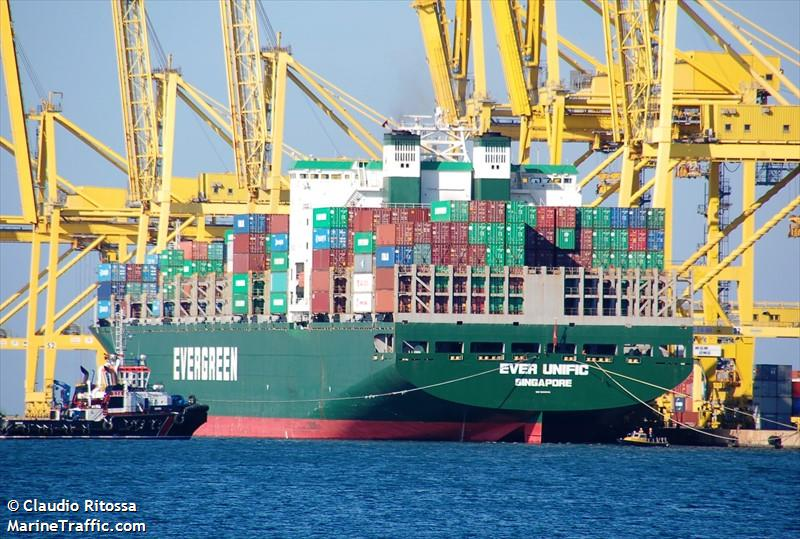
By Festus Poquie
Liberia emerged in 2024 as the world’s largest importer of passenger and cargo ships, with imports totaling $16.7 billion, even as exports of such vessels remained modest at $455 million, new trade figures show.
The data underline Liberia’s central role in global shipping markets and highlight a striking trade imbalance in a sector dominated by Asia’s shipbuilders and Europe’s shipowners.
Key trade flows
Imports: Liberia’s ship imports were mainly sourced from China ($9.19 billion), South Korea ($5.21 billion) and Japan ($1.6 billion) — the world’s leading shipbuilding nations. Germany ($416 million) and Denmark ($103 million) were smaller but notable suppliers. The fastest-growing origins between 2023 and 2024 were China (+$3.94 billion) and South Korea (+$1.19 billion).
Exports: Liberia exported $455 million in passenger and cargo ships in 2024, ranking it 22nd globally for that product category. Top destinations were Germany ($173 million), Denmark ($97.6 million), Norway ($69.9 million), Cyprus ($42 million) and South Korea ($40.5 million). The fastest-growing export markets year-over-year were Germany (+$89.5 million) and Cyprus (+$24.1 million).
What the numbers mean
Shipbuilding concentration explains much of the import picture: China, South Korea and Japan account for the bulk of global new-build production, so large-value purchases of vessels naturally flow from those countries.
The $16.7 billion figure likely reflects significant new-build contracts and large second-hand acquisitions recorded in trade statistics in the context of Liberia’s open maritime registry or the so-called flags of convenience.
The much smaller export figure suggests Liberia is not a major shipbuilder or re-export hub for high volumes of new tonnage, but it does engage in sales to established European and Asian maritime markets under its open registry program. Exports may represent sales of Liberian-registered tonnage, older tonnage resold, or specific niche vessels.
Liberia’s prominence in these statistics should be read alongside its longstanding role in global shipping beyond trade flows: the Liberian ship registry — one of the world’s largest “flags of convenience” — registers vessels owned by companies worldwide. Registry revenues and maritime services can be substantial even when domestic shipbuilding is limited.
Sector composition and classification
The trade category covers a range of vessels under “ships, boats, & floating structures,” including cargo vessels (excluding tankers and refrigerated ships), tankers, cruise and excursion ships, ferries, and refrigerated vessels other than tankers. Variations in vessel types and unit values can drive sharp swings in annual trade totals.
Financial and policy implications
Large-scale ship purchases require substantial financing, often through ship mortgages, export credit, or leasing arrangements. A spike in imports of vessels can affect external financing needs and exposure to currency and credit risks.
While Liberia may not build ships domestically, its registry, maritime services, and related legal, insurance and port services present revenue and employment opportunities. Maximizing local benefit depends on policies that capture services and ancillary spending tied to ship ownership and operations.
Rapid growth in imports and registry activity can raise questions about the volume of maritime trade and impact on the domestic economy.
Policymakers may consider leveraging registry receipts to invest in port infrastructure, maritime training and inspection services to broaden the domestic economic returns from being a major player in global shipping.
The 2024 figures place Liberia at the center of high-value ship transactions, reflecting broader global dynamics in shipbuilding and ownership.
How much of the financial upside from that position accrues to Liberia’s economy will hinge on government strategy, regulatory capacity, and the structure of contracts and financing tied to the vessels entering and leaving Liberian trade accounts.
Flag of Convenience or open registry, allows foreign ship owners to register vessels to avoid higher taxes, costs, and regulations in their home countries.
The registry includes over 5,500 vessels, encompassing container ships, tankers, and cruise ship passengers. As of Nov 1, 2025, it reached nearly 300 million GT, growing over 3% year-on-year.
Safety Record: Despite its size, the Liberian Registry (managed by LISCR) is on the “Whitelist” of the Paris and Tokyo Memorandums of Understanding for high-performance flag states.
Shipping register generates approximately $20 million in annual revenue for Liberia. Foreign corporations operating under the Liberian flag save billions of dollars in operating costs, which is a major point of discussion regarding the value of flag of convenience systems.

