

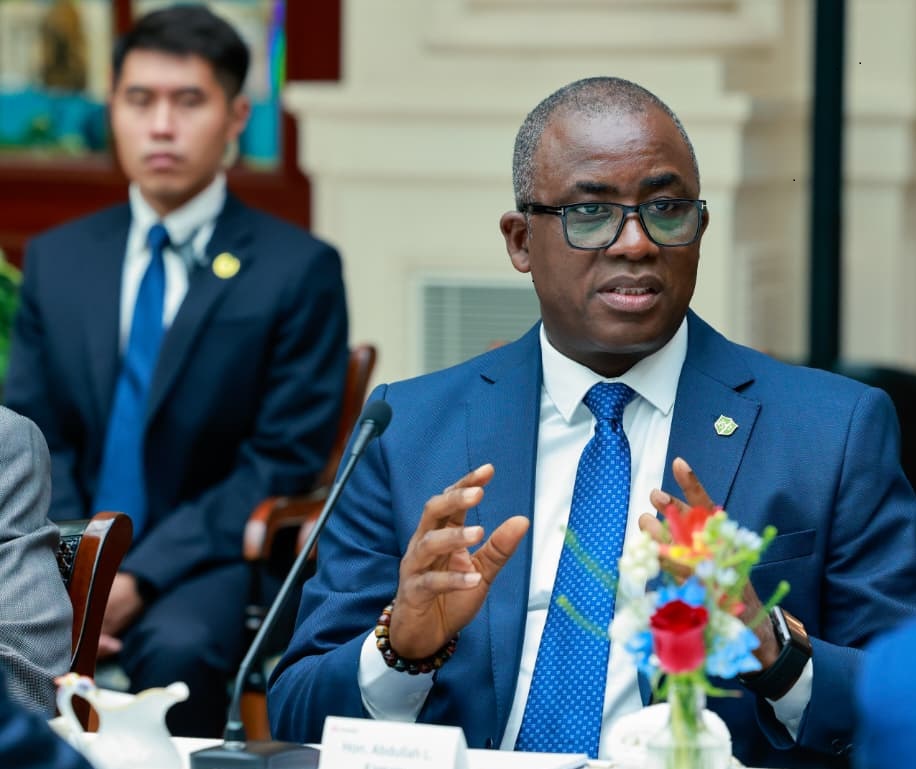
Liberia’s leading tech mogul has issued an early warning notice to government and policy actors to take deliberate actions to curb the distractive impact of Artificial Intelligence on governance, data and security, the economy and an already struggling job market.
Abdullah Kamara encourages the country’s preparedness for artificial intelligence (AI) beginning with the establishment of a national taskforce to guide AI development and regulation of associated high-risk applications.
“Liberia currently lacks clear guardrails for how AI should be used or governed,” Kamara said in a memorandum, warning that the country risks falling behind as other nations move to regulate the technology.
Regarding concerns relating to misinformation and elections integrity, Kamara highlighted the growing use of AI generated images and videos—commonly known as deepfakes—as a potential threat to public trust and stability.
Recent circulation of manipulated visuals linked to tensions along the Liberia–Guinea border underscores how rapidly digital misinformation can spread and influence public perception, he said.
Analysts warn that such tools could pose serious challenges during elections, particularly in areas where digital literacy remains limited.
Global AI Disputes Show the stakes the urgency of AI regulation is evident worldwide.
In the United States, the AI company Anthropic recently refused to remove safeguards from its AI system at the request of the U.S. Department of Defense, citing risks of misuse in autonomous weapons and mass surveillance.
This standoff highlights the ethical and security dilemmas surrounding AI, even in countries with advanced regulatory systems.
At the same time, Senator Bernie Sanders and Representative Alexandria Ocasio-Cortez introduced the “Artificial Intelligence Data Center Moratorium Act,” proposing a pause on new AI data center construction until clear rules are in place to protect workers, consumers, and communities.
Together, these cases illustrate the global recognition that AI, if unchecked, can pose serious societal, economic, and security risks.
Kamara argues that Liberia cannot afford to wait until such risks manifest locally.
The memorandum also raised concerns about data protection, noting that many AI tools used locally are developed and hosted outside Liberia. According to Kamara, this creates potential risks around how sensitive data—including financial, health, and biometric information—is collected, processed, and stored without local oversight.
Institutions such as the Ministry of Post & Telecommunications, Liberia Telecommunications Authority and the National Security Agency have yet to establish comprehensive AI-specific
regulatory frameworks.
Impact on Jobs and the Economy Beyond security, the memorandum raises questions about the future of work— particularly for young Liberians engaged in digital services.
Globally, AI tools are increasingly capable of performing tasks such as content creation, customer support, and basic design, raising concerns about how emerging economies like Liberia will adapt to shifting labor demands.
Experts warn that without proactive digital skills strategies, countries like Liberia could face significant workforce disruptions.
Kamara recommends the immediate establishment of a national taskforce to guide AI development, supported by: A national AI policy aligned with regional and continental, frameworks, legislation to regulate high-risk AI applications, interim guidelines for public sector use of AI tools.
He emphasized that early action could position Liberia to harness AI in key sectors such as agriculture, education, and healthcare.
Despite the risks, the memorandum notes that AI also presents significant opportunities to improve service delivery and expand access to essential services, particularly in underserved rural areas.
Liberia’s ongoing digital transformation efforts could provide a foundation for responsible AI adoption—if supported by clear policies and safeguards.
Kamara, headed the Liberia Telecommunications Authority and as Chairperman of the Liberia Digital Transformation Project, which trained 10,000 young Liberians in digital skills as promised by President Joseph Boakai.
He is widely recognized as a builder and innovator, having established Tamma Corporation, Liberia’s leading tech company, and the Netlib Vocational Training Institute, the country’s largest
private vocational training institution.
His work spans digital finance platforms, e@health systems, civic engagement tools, and tech-enabled solutions for agriculture, education, and local content creation.
Beyond technology, he has invested in agriculture, scholarships, and youth initiatives, quietly shaping Liberia’s digital and human capital landscape for over two decades.

