

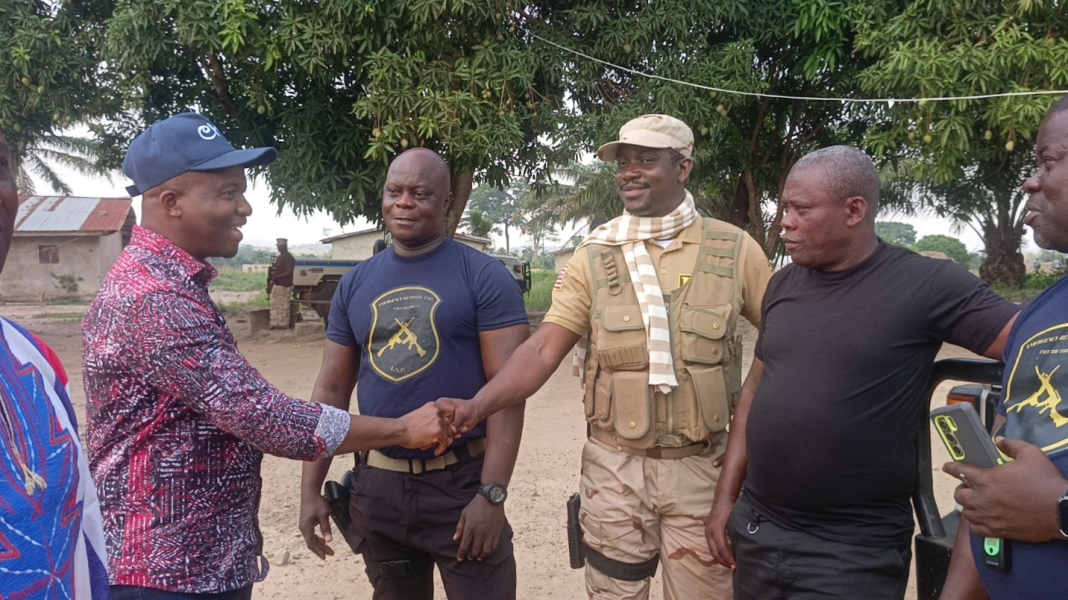
Liberia has taken a visible step to modernize its frontier security by installing Starlink satellite internet at the Sorlumba crossing in Lofa County. The initiative, spearheaded by Liberia Telecommunications Authority (LTA) Chairman Clarence K. Massaquoi, is part of a broader government plan to extend reliable communications to remote border posts long plagued by poor connectivity.
Massaquoi personally supervised the installation, underscoring its importance to the administration’s security agenda. “This is a government mandate to ensure our borders are secure and that our security forces have the tools they need to perform their duties effectively,” he said. The LTA is also in talks with Lonestar and Orange GSM to expand mobile coverage in border communities where residents and officers often struggle to communicate.
Security personnel at Sorlumba welcomed the intervention, describing it as a “timely and much needed gesture.” The sector commander noted that while GSM services are still awaited, Starlink provides a crucial first step in enabling real-time reporting and coordination. The LTA has pledged to replicate the project at other crossings, aiming to build a fully connected frontier network.
Yet the installation comes against a backdrop of mounting diplomatic strain. For 24 days, Guinean soldiers have maintained a presence on Liberian soil at Sorlumba, flying Guinea’s flag over the port of entry. On March 10, 2026, troops crossed the Makona River, removed Liberia’s flag, and hoisted their own—a symbolic act widely condemned as a violation of sovereignty.
Local youths briefly resisted, forcing the soldiers to retreat, but the Guinean contingent returned and reraised the flag. Since then, no Armed Forces of Liberia (AFL) or national police units have been deployed to the area, leaving villagers unsettled and in some cases displaced. Residents report living in fear of armed foreigners while awaiting a government response.
President Joseph Nyuma Boakai sought mediation through French President Emmanuel Macron, leveraging France’s influence in Francophone West Africa. A Memorandum of Understanding was signed with Guinea’s Mamady Doumbouya and Sierra Leone’s Julius Maada Bio to establish joint technical committees. ECOWAS and the African Union have urged restraint and dialogue. But nearly a month later, the Executive Mansion has issued no public update on whether Guinean troops will withdraw.
The silence has fueled criticism at home. Commentators argue that Boakai’s reliance on diplomacy, without deploying national forces or setting a withdrawal deadline, risks breaching his constitutional oath to “protect and defend” Liberia. An opinion piece in Sierra Leone’s Cocorioko newspaper warned: “When foreign soldiers cross into Liberian territory, raise their flag, interfere with local activities, displace civilians, and act as if they can rewrite the map by force, it is not a routine border matter to be addressed diplomatically alone.”
The juxtaposition is stark: on one hand, Liberia is investing in modern communications to strengthen border security; on the other, it faces a sovereignty challenge that technology alone cannot resolve. The Starlink installation symbolizes progress, but the continued presence of foreign troops underscores the fragility of Liberia’s territorial control.
For now, Sorlumba stands as both a pilot site for frontier modernization and a flashpoint of regional tension. Whether the government’s strategy of diplomacy first will succeed—or be judged as dereliction—remains uncertain. What is clear is that Liberia’s borders are no longer just lines on a map; they are contested spaces where connectivity, security, and sovereignty converge.

