

By Prof. Kettehkumuehn E. Murray, Ph.D. (former Montserrado County Representative)
“A house divided against itself may stand for a season, but never in peace.” Bassa Proverb
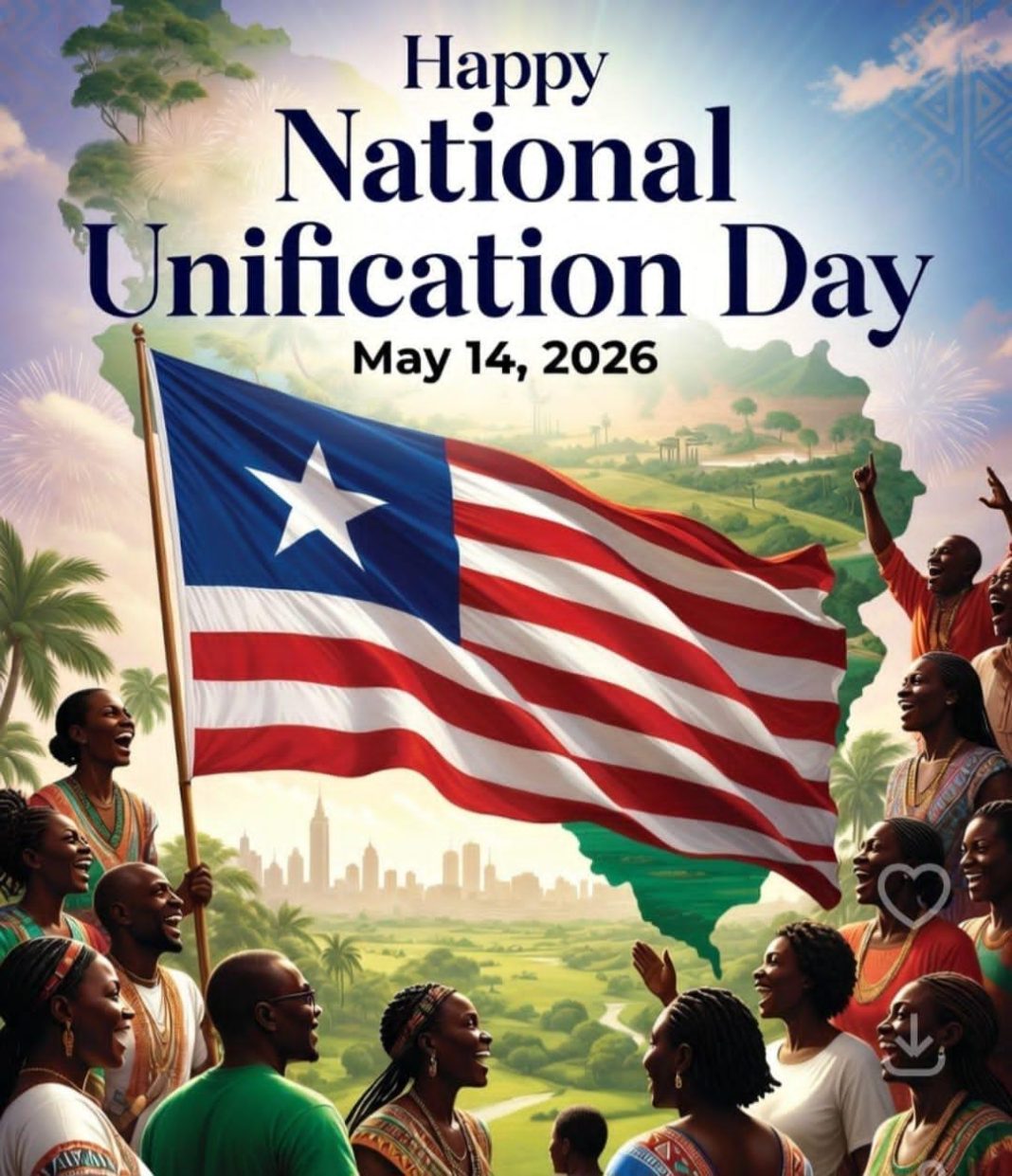
Tomorrow, the Republic observes National Unification Day, a holiday promulgated during the administration of William V. S. Tubman as an earnest attempt to bind together the varied peoples and histories of the nation. It was conceived not merely as a ceremonial observance, but as a corrective — a deliberate effort to soften the old and strident divide between those who claimed indigeneity on the one hand and those affirming “Americoism” on the other.
Several decades have now elapsed since that bold undertaking.
Time, however, possesses the inconvenient habit of interrogating noble intentions. And so the unavoidable question returns to us with solemn persistence: after more than sixty years, has the objective truly been achieved?
The symbols of unity are plentiful. Yet symbols, though useful, are not substance.
A politician of Americo-Liberian stock may appear in a country-cloth shirt once every six years during a political campaign. Another may sit briefly at a village feast, eat gee-bee before the cameras, and depart before dusk. Likewise, an “upriver” family may occasionally serve cornbread or banana bread at breakfast to an “up-country” family and regard the act as cultural accommodation.
But these gestures alone can not constitute national reconciliation. They are performances of contact, not always evidence of communion.
True unity is not occasional theatre. It is habit.
It is the point at which a Taylor, Johnson, or Nelson may sit in complete ease with a Toe, Doe, or Flomo — not as representatives of separate historical camps, but simply as compatriots. Unity arrives quietly, almost invisibly, when fellowship becomes so natural that we cease calculating tribe, county, surname, or ancestry before extending trust.
National unification was also intended to harmonize the many ethnic communities within Liberia itself — groups which, even now, do not always perceive one another as equals.
Old prejudices survive in jokes, whispers, and inherited assumptions. The Kpelleh people, for example, have long borne the burden of caricature as naïve or simplistic, often at the hands of neighboring communities. Terms such as Belle for the Kuwaa and “Gio” for the Dahn, though casually repeated in ordinary conversation, have at times carried undertones of mockery and reductionism.
Such labels may appear harmless to those who utter them, yet they reveal how deeply tribal condescension can root itself within the national psyche.
A divided people may share borders and flags while remaining strangers in spirit.
This is why National Unification Day remains not merely a remembrance, but a challenge. The holiday asks whether we are genuinely building a common civic culture — through shared schools, neighborhoods, friendships, marriages, institutions, businesses, and public life — or whether we continue merely to tolerate one another from separate corners of the Republic.
Unity cannot survive as a slogan recited once each May. It must mature into policy, custom, and instinct. It must be reflected in equal opportunity, mutual respect, and the deliberate dismantling of social suspicion.
It must become ordinary for Liberians of every background to work together, eat together, celebrate together, and grieve together without the invisible arithmetic of tribe and class.
The dream, nevertheless, remains worth fighting for.
For nations are not united by proclamations alone. They are united slowly — by empathy repeated across generations; by dignity extended where contempt once lived; by the stubborn insistence that no Liberian is alien to another Liberian.
And perhaps that is the unfinished promise of National Unification Day: not that unity has already been achieved, but that the Republic still possesses the courage to pursue it.
“In union strong success is sure, we cannot fail.”
(From the National Anthem)

