

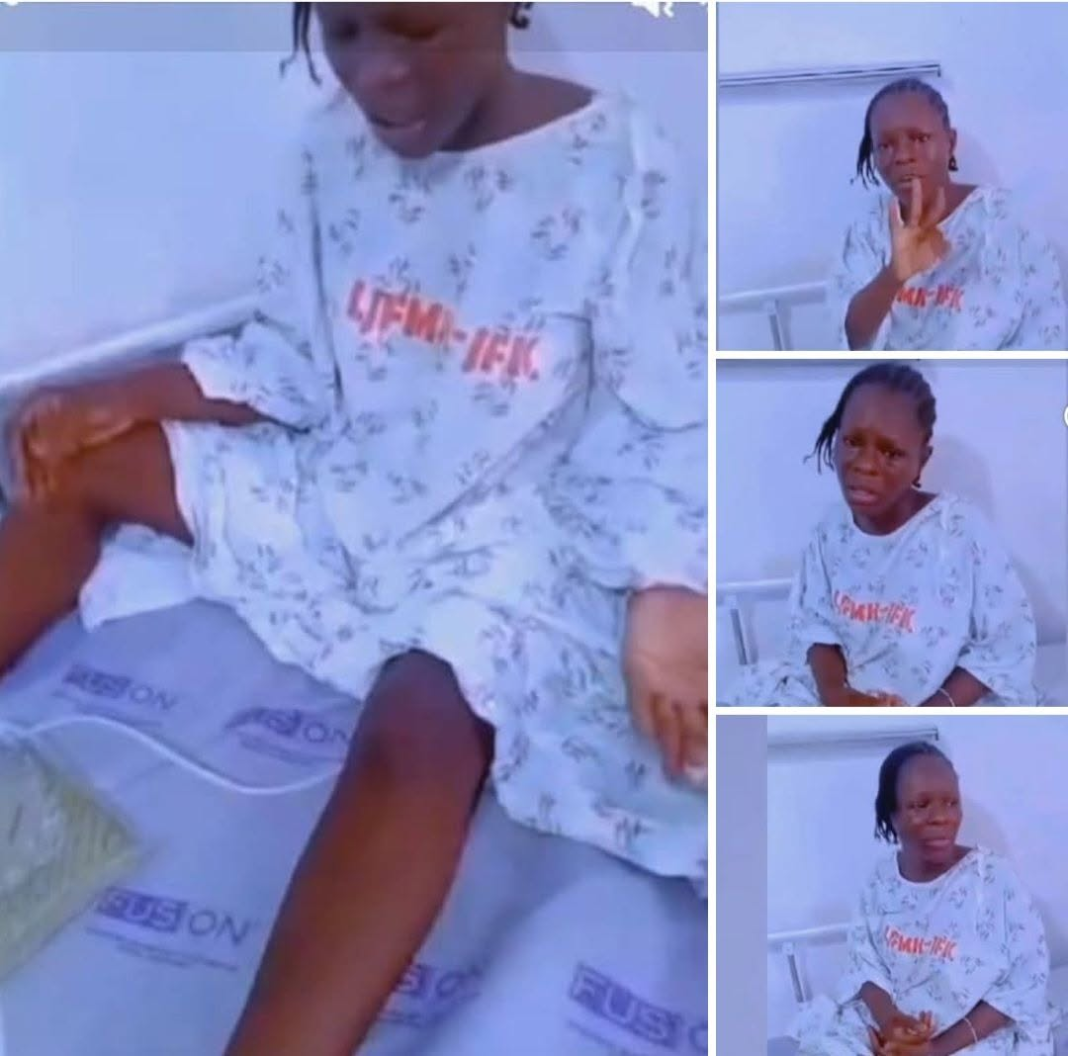
Liberia’s largest referral hospital – John F. Kennedy Memorial Medical Center is under searing public scrutiny after a young mother alleged that a botched spinal injection during childbirth has left her unable to walk—igniting fierce debate over patient safety, medical accountability, and the fragile state of Liberia’s healthcare system.
Jestina Wou, once an energetic mother, now lies bedridden in visible agony. Her ordeal began on April 5, 2026, when she was admitted to JFK to deliver her baby. After two grueling days of failed labor, doctors recommended an emergency cesarean section on April 7. What should have been a life-saving intervention, she claims, spiraled into a nightmare.
From her hospital bed, Wou recounted how three medical personnel—two men and one woman—repeatedly attempted to administer spinal anesthesia before surgery. “The first man tried four times and failed. The second man also tried. The woman came too, but there was no success,” she recalled through tears.
According to Wou, medical staff later admitted that a mistake had occurred during the spinal procedure. She was told the needle had allegedly struck her spinal cord, causing internal complications she described as “bad blood setting” in her spine.
Though she successfully delivered a baby boy, her joy was short-lived. In the weeks that followed, Wou says she endured unbearable pain, loss of mobility, and total dependence on medical support. “I used to walk by myself. Today, I cannot walk. My legs are weak, and I cannot feel anything from them,” she said. She now relies on catheters and adult diapers, stripped of normal body control.
Her allegations, if verified, raise grave questions about medical protocols at Liberia’s premier public health institution. Globally, spinal anesthesia complications occur in less than 1% of cesarean deliveries. But experts warn that repeated failed insertions can heighten risks of nerve trauma, bleeding, and infection.
Liberia’s healthcare system, still reeling from the Ebola crisis, remains critically strained. With fewer than 300 practicing doctors for over 5 million citizens, the country has one of the lowest doctor-to-patient ratios worldwide. Maternal mortality remains alarmingly high—652 deaths per 100,000 live births—placing Liberia among West Africa’s most vulnerable nations.
Adding to the controversy, Wou alleges that a senior doctor warned her family against publicizing the matter. “She told us if we put it on social media, she would defend JFK,” Wou claimed. Such remarks, if true, could intensify public concerns over transparency and institutional accountability.
Medical negligence is notoriously difficult to prove in Liberia. Malpractice lawsuits are rare, and compensation frameworks remain weak. Yet Wou’s case has struck a nerve, resonating with citizens who see her suffering as emblematic of systemic failures.
Founded in 1971 and named after former U.S. President John F. Kennedy, the hospital has long stood as Liberia’s flagship tertiary care center. But over the years, JFK has faced repeated criticism for overcrowding, resource shortages, and operational lapses.
Healthcare experts caution that not all post-surgical paralysis cases stem from negligence. Rare neurological complications can arise naturally from anesthesia or surgery. That distinction may prove central to any investigation.
As of publication, JFK authorities have not issued an official statement. Meanwhile, Wou’s family is appealing to the Government of Liberia, humanitarian organizations, and international medical partners for urgent intervention. “I am suffering every day,” she said. “I need help to walk again.”

