

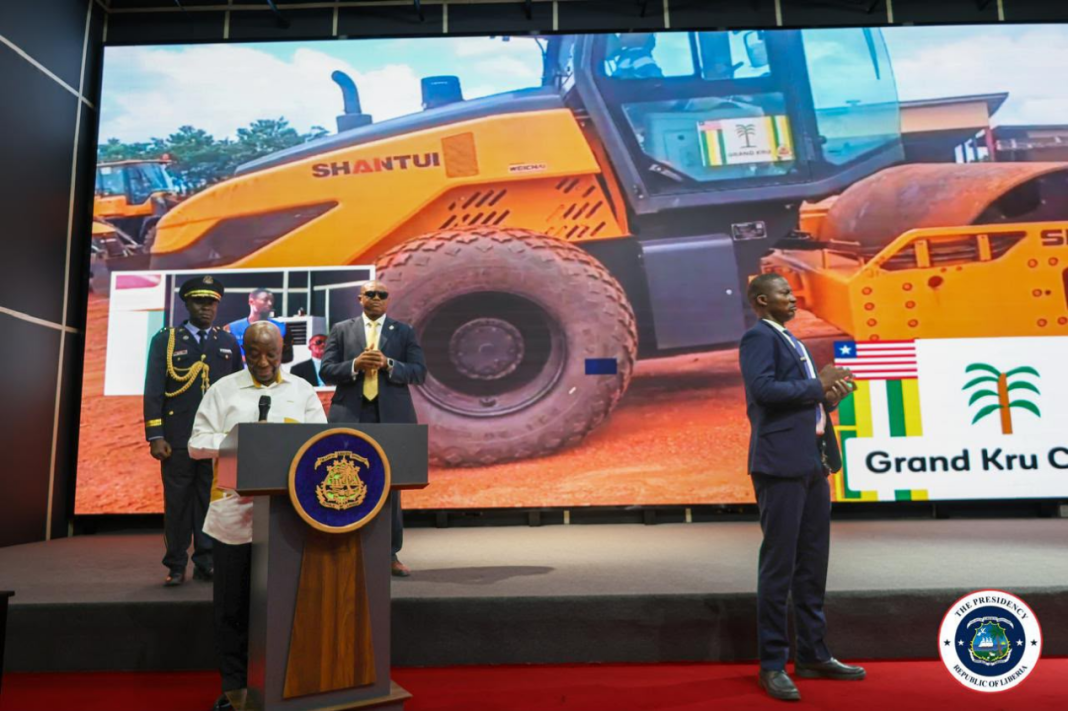
The proposition that the ruling establishment should refrain from politically engaging the Southeast through and should instead simply “connect the Southeast with roads and watch us” may sound politically catchy, but it rests on a false choice.
The Southeast does not have to choose between roads and Richard Nagbe Koon. It deserves development, democratic choice and the freedom to assess national leaders on their ideas, experience, character and record.
There should be no disagreement about the urgent development needs of Southeastern Liberia. The region deserves modern roads, bridges, electricity, quality education, healthcare, telecommunications, investment and greater economic opportunity. But these things must never be presented as political gifts or bargaining instruments. Development is an obligation of government to its citizens, irrespective of how those citizens vote or whom they support.
That is precisely why the argument against is unconvincing. Roads and leadership are not competing alternatives.
Infrastructure connects communities and expands economic opportunity, but it cannot substitute for political ideas, institutional experience or leadership. If the contention is that Richard Nagbe has nothing meaningful to offer the Southeast, then challenge his record, interrogate his ideas and present a stronger alternative.
That is what democracy demands. What democracy does not require is the construction of political boundaries around a region as though certain national figures should be prevented from competing for the confidence of its people.
The case for Richard Nagbe Koon should therefore be considered on substance rather than dismissed through geography. Reporting on his leadership of the House has highlighted his emphasis on institutional reform and accountability, including support for an Internal Audit Department and strengthening the Legislative Budget Office to improve budget analysis, oversight and PFM reform. These are substantive governance matters upon which his leadership can legitimately be scrutinized, supported or challenged.
There is also something important about a leader’s willingness to listen when confronted with internal criticism.
In October 2026, when lawmakers associated with the Reformist Movement raised grievances concerning the administration of the House, Richard Nagbe Koon publicly acknowledged that their concerns were legitimate and stated that administrative issues constituted the dominant part of their beyond criticism, nor should any public official enjoy such protection.
Rather, it demonstrates why the debate about his political future should revolve around his actual record, judgement and capacity to respond to institutional challenges.
More fundamentally, the original argument raises an important question: **who owns the Southeast politically?
The answer must be unequivocal. Nobody does.
Neither the ruling establishment nor the opposition owns Southeastern Liberia. No politician, political party, public official or commentator possesses an exclusive political title to Grand Gedeh, Maryland, Grand Kru, River Gee or Sinoe. The Southeast belongs to its people, and those citizens are fully capable of examining competing visions of leadership and determining for themselves who deserves their confidence.
To speak of politically “inserting” Richard Nagbe into the Southeast therefore risks understating the democratic agency of Southeasterners themselves. No national establishment can simply impose political acceptance on an entire region.
Political legitimacy must ultimately be earned through persuasion, performance and public confidence. If Richard Nagbe Koon believes that his experience and leadership can speak to the aspirations of Southeasterners, he should be free to make that case directly to them, just as his opponents should be allowed to present theirs.
So, yes, connect the Southeast. Build the roads that its people have demanded. Expand electricity and telecommunications, strengthen healthcare and education, encourage investment and agriculture, stimulate commerce and create employment.
But when those roads are built, let him bring facts and accountability for transfers travel them. Let his political competitors travel them as well. Let every serious national leader enter the marketplace of ideas, defend a record, answer difficult questions and submit a vision to the judgement of the people.
If Richard Nagbe Koon ideas fail to resonate, Southeasterners can reject them. But if his leadership, message and record persuade them, their judgement deserves equal respect. Anyone who genuinely trusts the political intelligence of the Southeast should have nothing to fear from Richard Nagbe Koon making his case directly to its people.
There is also an institutional lesson worth remembering. If, as you have stated, the author of the original commentary serves within the Judiciary, the significance of that public voice makes institutional restraint particularly important. Liberia faces substantial questions involving security, access to justice, institutional credibility and the rule of law.
Those are important areas in which voices from the justice system can make a particularly meaningful contribution. Political competition should remain a contest of ideas among political actors, ultimately settled by the sovereign judgement of citizens.
The choice, therefore, is not roads or Koon. That is the false premise that must be rejected. The better proposition is development and leadership, roads and democratic competition, infrastructure and freedom of political choice.
Development should empower the Southeast, not politically quarantine it. New roads should carry farmers to markets, students to schools, patients to healthcare, businesses to new opportunities and, yes, competing political leaders to the citizens whose confidence they seek.
Ultimately, the strongest rebuttal to those who say “connect the Southeast and watch us” is simple: yes, connect the Southeast, and then watch democracy work. Watch Richard Nagbe Koon travel those roads and stand before the people.
Watch his opponents do the same. Watch records confront records, ideas challenge ideas, and leadership compete with leadership. Then step aside and trust Southeasterners to render their own verdict.
The Southeast needs no political gatekeeper deciding who may seek its confidence. If Richard Nagbe Koon has demonstrated the experience, resilience and leadership to make a credible claim for that confidence, let him make it boldly and let the people judge. Build the roads, certainly, but do not erect political roadblocks against Koon.
Liberia becomes stronger when development reaches every citizen, political competition remains open to every legitimate contender, and the final word belongs not to commentators, establishments or gatekeepers, but to the people themselves.

