

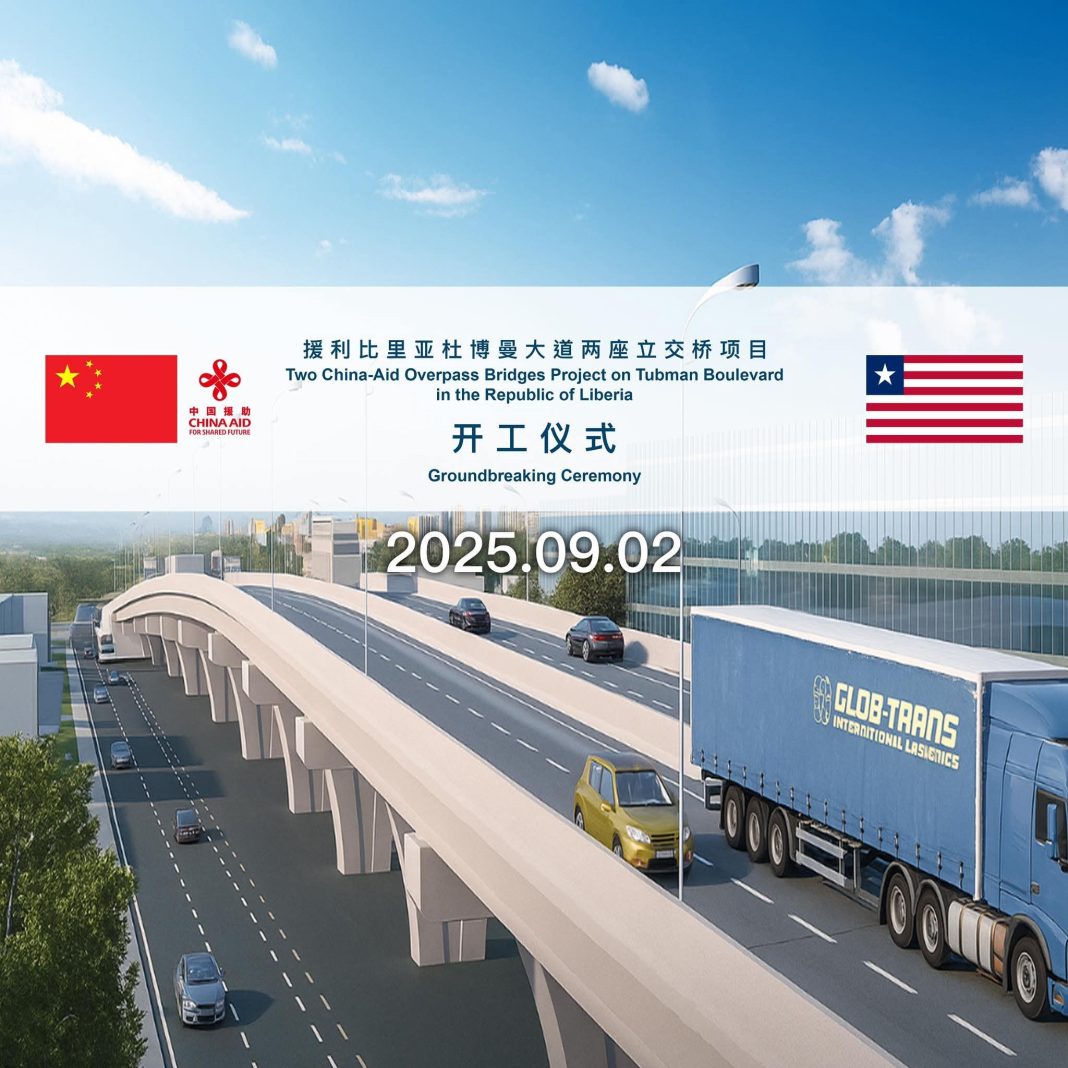
President Joseph Boakai on Tuesday launched construction of two China-funded overpass bridges on Tubman Boulevard, saying the project will reduce traffic congestion, lower transportation costs and unlock economic benefits for traders, businesses and emergency services along one of the capital’s busiest corridors.
The groundbreaking ceremony in Congo Town marks the start of work on two grade-separated intersections — one near the Ministerial Complex and the other at SKD Boulevard — financed and delivered as part of cooperation with the People’s Republic of China.
The President said the overpasses, which the contractor is expected to complete within a two-year timeframe set by China, will shorten travel times, improve road safety and reduce logistical bottlenecks that now increase costs and delay goods and services.
“This is the power of road infrastructure: it shortens distances, lowers costs, and enhances economic growth,” Boakai said, linking the project to his administration’s ARREST Agenda for Inclusive Development (AAID). He said the overpasses will improve access to schools, clinics and markets, ease movement of ambulances and fire trucks, and support public transport efficiency.
Economic impact and jobs
The President projected the project will generate “hundreds” of direct and indirect jobs — from skilled technicians and machine operators to vendors and support service providers — and stressed requirements for Liberian participation, on-the-job training and decent work standards.
He urged the contractor to maintain high quality and safety standards and asked supervision and design teams to enforce transparency during execution.
By reducing congestion and improving logistics along Tubman Boulevard, officials say local businesses and small traders should see lower transport costs and faster delivery times, which can boost commercial activity and productivity in Monrovia’s central corridor.
Boakai also highlighted the overpasses’ role in a broader strategy to connect urban centers with agricultural and mining regions, and to align investments in roads with planned energy and water projects to reduce barriers to growth.
While the President thanked the People’s Republic of China for its “ongoing generosity,” he emphasized that the government would be responsible for continued maintenance and stewardship of the corridor, including managing right-of-way, restricting unnecessary parking and enforcing road safety rules. He warned residents that construction will bring short-term disruptions — diversions, slower traffic and work zones — and asked for patience and cooperation.
The government called for media scrutiny of both progress and challenges to keep citizens informed and reiterated expectations that the contractor deliver the project on schedule and to agreed standards.
The Tubman Boulevard overpasses join a slate of infrastructure priorities singled out by the Boakai administration as central to inclusive economic development. If delivered on time and maintained, analysts say such urban transport upgrades can reduce business operating costs, improve emergency response, and create spillover demand for local materials and services.
The project also cements a high-profile element of diplomatic cooperation with China, which has been increasingly active in financing and building infrastructure across West Africa.

