

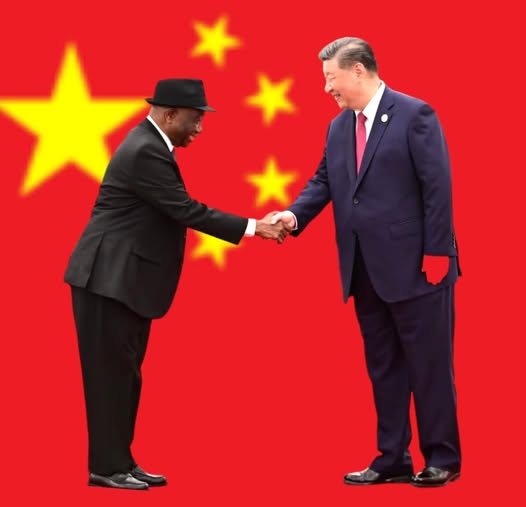
President Joseph N. Boakai’s vision of connecting Liberia through his developmental blueprint known as the ARREST Agenda is a transformative step toward inclusive national development. To realize this ambitious agenda, it is vital for Liberia to expand and strengthen its developmental partnership with the People’s Republic of China, particularly through enhanced engagement with the Belt and Road Initiative (BRI).
Across the African continent, nations are increasingly setting aside outdated notions of neocolonial dependency and instead embracing pragmatic, results-driven cooperation with countries like China. This shift stems from a growing recognition that Africa’s future must be built on concrete deeds rather than mere rhetoric.
With a rapidly expanding youth population and urgent infrastructure needs, African leaders are now pursuing practical solutions to achieve sustainable development and the BRI offers such a solution.
It is true that vestiges of the neocolonial mentality still exist in some African countries. In many cases, there remains an unfounded hope that former colonial powers will play a leading role in the continent’s modernization.
However, the reality has shown that progress lies not in nostalgia, but in forging new partnerships that deliver tangible outcomes.
China’s BRI has already transformed infrastructure across Africa in ways that are visible, impactful, and sustainable. From the modern skyline of New Cairo in Egypt, to Kenya’s Standard Gauge Railway, from the Toll Bridge in Sierra Leone to the Kaduna-Abuja Railway in Nigeria, and the modernized airport in Zimbabwe; Africans can now touch, see, and experience the results of Chinese-supported development projects.
Liberia’s decision to join the BRI in 2018 was a significant milestone in its pursuit of infrastructure-led growth. Yet, it is important to remember that this path was laid by former President Ellen Johnson Sirleaf, whose administration reestablished Liberia’s diplomatic ties with the People’s Republic of China.
Since then, Liberia has been a beneficiary of China’s support in various developmental areas, making clear the potential of this strategic partnership.
The evidence of China’s commitment to Liberia’s development is clear and far-reaching. The JFD Hospital in Nimba County, the China-Liberia Agricultural Demonstration Center in Bong County, and the expansive Fendell Campus of the University of Liberia in Montserrado are just a few examples of infrastructure projects made possible through Chinese cooperation. Other monumental projects include the state-of-the-art Ministerial Complex in Congo Town and the Capitol Building annex, which have improved government operations and public services.
Furthermore, the construction of the new terminal at Roberts International Airport (RIA) has modernized Liberia’s air transport capacity, enhancing both tourism and trade.
In addition, the ongoing construction of the National Clinical Diagnosis and Treatment Laboratory in Margibi County is a testament to China’s continued dedication to health infrastructure, one that aligns directly with President Boakai’s ARREST Agenda, which places strong emphasis on health, education, roads, and technology.
These projects exemplify the fruitful outcomes of the meeting between President Xi Jinping and President Boakai at the FOCAC (Forum on China-Africa Cooperation) Beijing Summit. They also reflect China’s strategic interest in supporting Liberia’s development in line with mutual respect, non-interference, and win-win cooperation.
In the coming months, another milestone under the BRI is expected to be the construction of two overpass bridges in Monrovia. This development is highly anticipated as it promises to ease traffic congestion along the Congo Town corridor and mark a significant step toward modern urban planning.
These would be the first overpasses constructed in Liberia in decades, highlighting the practical and timely nature of Chinese infrastructure support.
However, beyond these urban improvements, the government of Liberia should now prioritize broader infrastructural development, especially farm-to-market roads that are critical for rural economic empowerment.
Roads in many rural areas remain impassable during the rainy season, limiting access to markets, schools, and healthcare. Expanding BRI engagement to target these rural transport networks would stimulate agricultural productivity, reduce poverty, and promote national cohesion.
China’s own development experience offers valuable lessons in this regard. From Beijing’s Central Business District to the mountainous city of Liupanshui in Guizhou Province, from the modern economic hub of Zhuhai in Guangdong Province to Wanning City soon to be home to the FOCAC headquarters China has proven that consistent investment in road and transport networks can unlock inclusive and sustained development.
In Liberia, similar transformations are possible. In addition to more overpass bridges in Monrovia, cities such as Ganta, Gbarnga, Buchanan, and Kakata are experiencing rapid urban growth and will soon require improved infrastructure to meet increasing population demands. The government’s plan to build 100 schools, hospitals, and key bridges, including across the Du River that separates central Monrovia through Slipway, Battery Factory, 12th Street, and Kesselly Boulevard, should be prioritized through China-Liberia cooperation.
There are already indications that China is interested in supporting these projects. However, turning these prospects into reality will require proactive and practical engagement. Liberia must advocate for strategic partnerships based on win-win cooperation, where both nations benefit economically, socially, and politically.
One of the key strengths of China’s approach to cooperation under the BRI is its emphasis on infrastructure as a catalyst for development. The BRI is not a charity, it is a strategic partnership based on mutual needs and mutual respect. For Liberia, it represents an opportunity not just to build roads and bridges, but to modernize its economy, empower its people, and attract new investment.
To conclude, expanding and strengthening BRI cooperation with China is not just a strategic option for Liberia, it is a necessary pathway for national transformation.
As President Joseph N. Boakai pursues his ARREST Agenda to connect Liberia and drive inclusive development, aligning with the BRI will provide the resources, expertise, and momentum needed to achieve this vision. Liberia has already seen what this partnership can deliver.
Now is the time to deepen it, diversify it, and ensure that every Liberian from Monrovia to Maryland benefits from the country’s forward march into development.
About the Author: Nicholas D. Nimley, holds a Master’s in Communications from Renmin University of China. He is a Liberian journalist, a Communication Expert, an international double award-winning developmental journalist, and a Public Affairs Diplomat. He’s an internationally certified academic researcher. CEO of South Liberia Post online newspaper. He can be contacted: at nimleynicholasd@gmail.com, or nicholasnimleyd@ruc.edu.cn Cell#s+231776586433 or +8615101695212

