

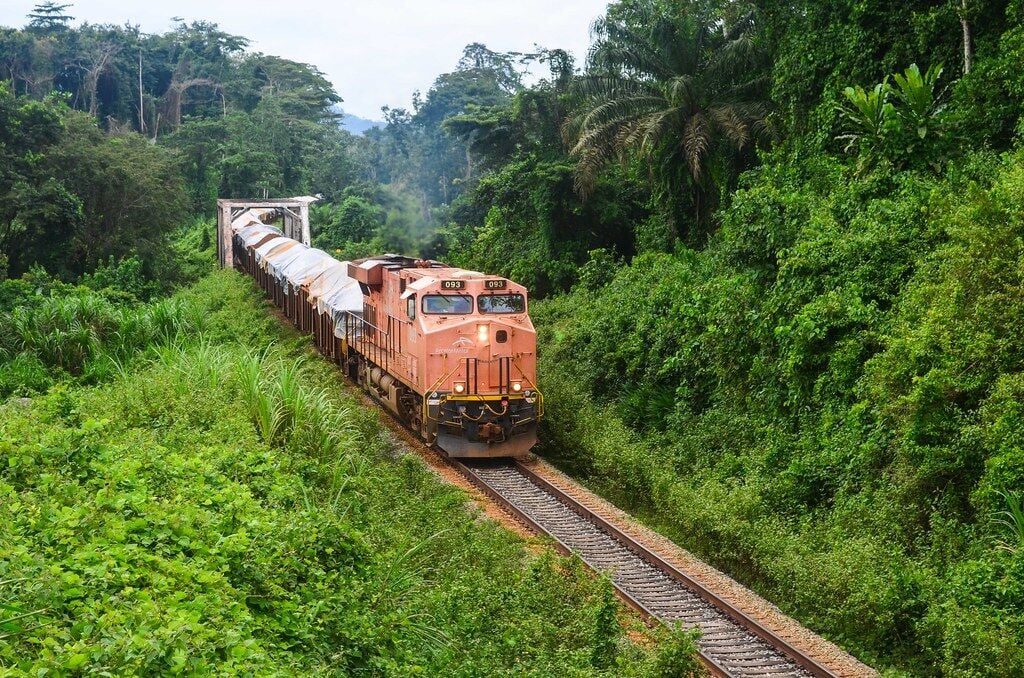
The House of Representatives is due to vote today on a Concession and Access Agreement (CAA) that would allow U.S. firm Ivanhoe Atlantic to operate on the 243 km Yekepa–Buchanan rail corridor and invest almost US$1 billion in Liberia’s transport infrastructure.
The CAA, which has the backing of President Joseph Boakai’s administration, follows more than six years of negotiations between the government’s Inter Ministerial Concessions Committee (IMCC) and Ivanhoe Atlantic. It builds on a 2021 Implementation Agreement between Liberia and Guinea on shared transport infrastructure.
The deal would also support the establishment of an independent National Rail Authority (NRA), a policy direction endorsed by Executive Orders No. 153 and No. 136 issued by President Boakai.
Ivanhoe Atlantic has already paid roughly US$37 million to the Liberian Revenue Authority via the Central Bank of Liberia.
If the CAA is ratified, the company has committed a further US$35 million in concession payments to the Central Bank, including US$1 million within 10 business days of presidential signature and gazetting, US$10 million within 10 business days after the agreement takes effect, and additional payments tied to the start of operations and key NRA milestones.
The agreement also establishes a Community Development Fund (CDF) to support communities along the rail corridor in Nimba, Grand Bassa and Bong counties.
Ivanhoe Atlantic has pledged annual CDF contributions beginning at US$1 million and rising to US$5 million in five years, to be paid annually over the life of its ore transits through Liberia.
Capital investment is planned in two phases. Phase 1 will see US$64 million directed to road works providing access to the rail line, and rehabilitation of existing track and port facilities, and is expected to create about 500 direct jobs during implementation.
Initial throughput capacity after Phase 1 is targeted at 2–5 million tonnes per annum (Mtpa) of high-grade iron ore.
Phase 2 envisages an additional US$888 million in direct capital expenditure — about US$452 million for further railway upgrades and US$436 million to expand Buchanan Port with an eventual export capacity target of up to 30 Mtpa, subject to feasibility studies and regulatory approvals.
Ivanhoe Atlantic also plans complementary investment in Guinea, with approximately US$800 million earmarked to connect the two countries’ trade corridor.
The company estimates that granting user access to the railway could generate roughly US$60 million a year for Liberia through rail user fees, dividends, taxes and related revenues.
The CAA would mark the first of many potential multi-user arrangements on the corridor and could unlock broader economic benefits across mining, agriculture, freight, manufacturing and services.
The Boakai administration has highlighted the potential for such long-term concession revenues to feature in the 2026 national budget planning.
The House vote will determine whether Ivanhoe Atlantic becomes an authorized rail user under the proposed multi-user framework, a decision that could have significant implications for Liberia’s infrastructure development, job opportunities and fiscal outlook.

