


Widely known in social media ecosystem as Prophet Key, Justin has gone three days into a six-month sentence at Monrovia Central Prison after the Supreme Court found him guilty of contempt for a series of social media statements that attacked Chief Justice Yamie Quiqui Gbeisay, accused the court of corruption and used vulgar language directed at the justice’s mother.
The Full Bench delivered the ruling after Prophet Key appeared before the justices, admitted wrongdoing and pleaded for mercy. In its written opinion the Court said Justin’s “conduct in spewing out invectives, insults, abuses and indecent language constitutes a violation of constitutional right to freedom of expression,” reasoning that such conduct undermined the dignity and integrity of the judiciary and threatened public confidence in the administration of justice.
The Court cited its inherent power to define and punish contempt in imposing the custodial term.
The decision has split public opinion across legal, political and civil society circles. Supporters say the ruling draws an important line between robust criticism of public officials and abusive language that targets private individuals — including relatives of officials — and degrades public discourse.
Former Finance Minister Samuel Tweah and other commentators argued the Court has not stripped anyone of free speech rights but rather refined the scope of protected speech to exclude invective and demeaning references to private persons.
“Shaming a public official need not — and should not — rely on vulgar or sexualized attacks on nonpublic figures,” he said, summarizing arguments advanced by several legal commentators who cite Article 15 of the 1986 Constitution, which guarantees freedom of expression while making the speaker responsible for its abuse.
Critics counter that the judgment risks chilling legitimate criticism of public officials and raises procedural concerns. Several lawyers and civil society figures questioned whether the Chief Justice should have presided over proceedings in which he was personally named, invoking judicial recusal principles and arguing the appearance of impartiality matters.
Isaac Jackson and others also urged that the Court separately address the corruption allegations Prophet Key aired, rather than resolving the matter solely as contempt over language.
Legal scholars expressed divergent views about the long-term impact on Liberia’s free speech jurisprudence.
Rights lawyer Cllr. Tiawan Saye Gongloe published a public education commentary explaining contempt law and urging respect for institutional processes, arguing that contempt protects the administration of justice and that constitutional mechanisms — such as impeachment — exist to address judicial misconduct.
George K. Werner and other procedural critics, while not necessarily contesting the substance, warned that the Court’s handling of the case may set uncomfortable precedents about the role of judges when personally involved.
The Supreme Court’s opinion explicitly narrowed the scope of protected expression by indicating that “spewing insults, mentioning the private parts of women and using invectives” are not protected forms of speech under the Constitution.
Proponents say that interpretation protects third parties and preserves public order; opponents warn it could be used unevenly to silence dissent if applied without transparent standards or oversight.
Several past Supreme Court precedents cited by legal commentators — including In re Scott & Roberts (1984) and In re Joseph K. Jallah (1987) — were invoked to underline the Court’s long-standing view that unfounded public allegations of corruption can undermine public confidence and, in some circumstances, constitute contempt.
Yet the justices’ decision in the Prophet Key matter did not adjudicate the substantive corruption claims against the Chief Justice, focusing instead on the virulence and targets of the speech.
Observers say the ruling is likely to prompt further debate and possible legislative or judicial clarification.
Civil society groups, press freedom advocates and some lawmakers called for clear guidelines that reconcile the protections of the Press Freedom Act and Article 15 with the Court’s contempt powers to avoid inconsistent enforcement.
The Prophet Key case has become a touchstone for a broader national conversation: how to balance vigorous criticism of public officials with the protection of private individuals and the integrity of state institutions.
The Debate
Former Finance Minister Samuel Tweah:
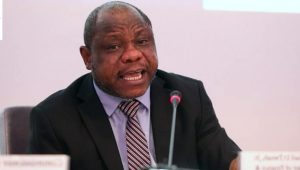
The Supreme Court Has Not Stripped Prophet Key of His Free Speech Rights: It has Only Refined and Repurposed that Speech!
The public appears divided about the recent Supreme Court ruling on Prophet Key. Given cultural sensitivities to abusing the private parts of women as a form of “free speech, ” the Liberian public appears torn between its abhorrence of vulgarity couched as speech and its support for unfettered, unrestrained speech as a foundation of postwar democratic governance.
The ruling at the center of this national debate may be the most consequential of post war Supreme Court opinions as to define a judicial era. Such ruling must be properly understood, shorn of the trappings of politics.
Support for and criticism of the ruling can be assessed along three broad rubrics:
1) The core substance of the ruling as grounded in constitutional law;
2) The legal PROCEDURE toward the ruling, distinct from and irrespective of, the ruling itself; and;
3) Extensions, interpretations and characterizations of the ruling that MAY or MAY NOT be grounded in FACT or LAW.
First, no criticism of this ruling can substitute for its being the prevailing law of the land on free speech.
But what does the ruling say and what does it not say?
In its opinion the Court rendered that:
“ Accordingly, this court, pursuant to its inherent power to not only punish for contempt but to determine what constitutes contempt, hereby adjudges the contemnor [Prophet Key] guilty of contempt of the Honorable Supreme Court of Liberia and declares that his CONDUCT IN SPEWING OUT INVECTIVES, INSULTS, ABUSES AND INDECENT LANGUAGE CONSTITUTES A VIOLATION OF CONSTITUTIONAL RIGHT TO FREEDOM OF EXPRESSION.”
Hold on seriously a minute. This is now the law that is not even getting a hearing in this discussion. What is the court saying?
The Court says here that spewing insults, mentioning the private parts of women and using invectives, which are words intended to harm or shame, are NOT protected as forms of free speech under our constitution.
I am perplexed as to why some would describe this as “judicial overreach.” Shaming a government official does not require mentioning the private part of his mother neither does it require a violent language. Shaming only requires the outing of public information involving the official. It is this outing that does the shaming, an important goal in public criticism, not the abusive verbiage deployed!
Free speech is intended to expose, portray or lampoon a public wrong with the aim of engendering change. Insults targeting the private parts of mothers who do not fulfill any public role detract from this goal, violating their constitutional rights and the rights of others who are NOT holders of public office.
Jacob Jallah argued on SPOONTALK two nights ago that public officials, whether presidents, justices, legislators or ministers, are expected to evince the highest degree of tolerance as public servants. This is true. But mothers, sisters, brothers and friends of these holders of public office should not be expected to wield such tolerance since they are not accountable to Liberians in any way and as such should not be the recipients of invectives directed at public officeholders.
In this fundamental sense, the supreme Court’s ruling is landmark. It restricts public criticism to holders of public office, protecting the constitutional rights of relatives and affiliates of office holders. It redefines free speech as not consisting in the tone, virulence or vehemence of the language used to deliver it but in the substance of what is said!
Importantly, the court did not address allegations of corruption against the Chief Justice and the entire bench EVEN THOUGH the lawyers friendly to the Court, called amaci curiae argued that these allegations were themselves a source of contempt worthy of punishment. The justices did not fall for this trap, limiting their ruling to the virulence of a verbal abuse or the opprobrium of an invective.
So, based on the ruling, we now know free speech in all forms, except in the form of verbiage targeting the female genitalia, or verbiage evocative of hate or harm, is PROTECTED. This has always been true but the Court has used the Key situation to illumine this verity.
What the ruling does not say?
The ruling does not say that criticism of public officials is now censured as some critics of the Court’s ruling would have us believe. It only says that provocative, violent or hateful language that are not compatible with values defined in the Liberian constitution are NOT PROTECTED.
Since the constitution gives the Supreme Court the right to interpret what those values are, whatever the Court defines as values becomes the meaning of “values “as expressed in the constitution.
In its ruling, the Court believes allegations of corruption against public officials, including allegations against justices themselves cannot be brought under the auspices of a contempt trial; but venomous language directed at the mothers of justices, or the vehemence of verbal attack against justices themselves are contemptible and are a violation of free speech if extended to presidents, legislators or other holders of public office.
Nothing in this ruling places limits on my free speech and that of any other Liberian.
The second rubric pertains to criticism about the procedure used to derive this judgement. Some critics agree with the judgment but disagree with the procedure. Others may disagree with both the means and the judgment.
George K. Werner, former minister of education, is the foremost procedural critic of the Court. Werner does not appear to disagree with the substance of the Court’s ruling, though the admonition he evokes in the title of his piece “On Why the Moment Should Stand as a Warning in Liberia’s Legal and Political History “is not consistent with the ruling’s preponderant protections.
Werner may disagree and argue that his warning pertains more to procedures the Court used. However, had the Chief Justice gone to the civil law court to sue for damages, the criticism might have been “but what outcome do we expect when the Chief Justice of the Supreme Court sues a critic! “
Importantly, Werner accords value to this judicial procedure as FUNDAMENTAL and DEMONSTRATIVE of the RESTRAINT and TOLERANCE needed and required for the perception of judicial credibility, which may be as or more important than the substance of judicial rulings themselves.
According to Werner, the credibility and public confidence the Court aims to instill by preventing the disparagement or impugning of justices, either via the abuse of their mothers or the virulence of the language used to criticize them, is undermined by what he considers procedural violations that appear to depict the Chief Justice as both judge and complainant.
This is a legitimate criticism, and Werner may be partly right, though we may still and most likely have obtained the same results at the civil law court, even if the standard there is much higher. It is easy to show that Key’s willful and repetitive use of invectives over the last several years as a form of speech is “malicious “as defined under defamation laws framing free speech.
For Werner, the substance of the ruling derived might have been compromised by the means used to derive it. I counter that the clarity and boundaries established by the ruling writs larger from a public good perspective, since the ruling somewhat settles the confusion around where one Liberian’s right ends and where another’s begins. This public good gain outweighs the short-term reputational risk the Court has incurred.
This brings us to the third rubric which pertains to characterizations of the ruling as “ending the reign of free speech as we have known it since the election of 2005. “This is far from the reality.
Liberia ended autocratic rule since the 2005 elections and no president, legislature, or judiciary can take us back. The ruling is specific and targeted, as such generalizations from it that aim to distort the post-ruling meaning and understanding of free speech is unacceptable.
In sum, the Court has massively refined the vehemence of Key’s public criticism and protected third party mothers or other relatives, who are not holders of public office, from defamation. In doing so, the Court has redefined the role of a public critic, directing critics away from vulgarities, and nudging them toward the facts and substance in the act of criticism.
These clarifying boundaries redound to public good and lend succor to our gradually hardening — no longer burgeoning— democracy. They are also important for consolidating our peace and unity since hateful rhetoric may spur national disintegration. With the ruling both Free Speech and public discourse are now enhanced since venom and invectives that may inflict harm have been formally stripped of legal protections.
Prophet Key can now become a public critic operating within the boundaries of Liberian free speech now established by the Court without losing any value! That we took this long to arrive is not the issue. That we have arrived is the crux!
Let’s abstract from the politics of the moment to see the importance of the ruling!
Rights lawyer Cllr Tiawan Saye Gongloe

CONTEMPT OF COURT, FREEDOM OF SPEECH, AND THE BUILDING OF A VIBRANT DEMOCRACY IN LIBERIA
A Public Education Commentary
Since the Supreme Court of Liberia rendered its decision sentencing Prophet Key to six months’ imprisonment for contempt of court, diverse views have been expressed across our country. Some have defended the ruling. Others have criticized it strongly. In a democracy, that diversity of opinion is healthy.
As someone who teaches Constitutional Law, Human Rights Law, Criminal Law, and Law and Politics at the law schools in Liberia, I consider it my public duty to promote understanding of our law. For that reason, I have decided to engage in public education on the law of contempt in Liberia. I am not doing so in order to defend any particular outcome, not to defend the judiciary per se, but to clarify the legal principles involved so that our people may engage in informed democratic discourse.
Democracy thrives on disagreement. It does not thrive on destruction.
My Record on Free Speech — Context Matters
Over the years, I have criticized decisions of the Supreme Court of Liberia in many cases. I have disagreed with reasoning, interpretation, and outcomes. But I have never done so in language that undermines the dignity, legitimacy, or institutional relevance of the Court.
That distinction matters.
There is no lawyer in Liberia who has defended freedom of speech and of the press on a pro bono basis more consistently than I have. Long before holding public office, I fought in court to secure the release of journalists and outspoken political activists who were jailed for speech-related offenses.
In 2006, when President Ellen Johnson Sirleaf offered me the position of Associate Justice of the Supreme Court, I declined. I chose instead to serve as Solicitor General. I told her clearly that my reason for declining was that I believed I could better protect freedom of speech and freedom of the press from that position. She agreed with my reasoning.
In 2009, while serving as Solicitor General of Liberia, I could have prosecuted individuals under the laws of Sedition, Criminal Libel against the President, and Criminal Malevolence. Instead, I drafted and circulated the original proposal to repeal those laws and submitted it to the President, the Press Union of Liberia, and members of the Legislature.
I recount these facts not to boast, but to establish principle: I have consistently stood on the side of free speech. But I do not stand for recklessness and indecency, because reckless speech can undermine democracy itself.
Disagreement is the kernel of democracy.
But decency is the foundation of democratic stability.
The Constitutional Framework
Article 15 of the Constitution guarantees freedom of speech and of the press. But it also makes the speaker responsible for the abuse of that freedom. Freedom in a constitutional democracy is never without responsibility.
The Constitution also provides lawful mechanisms for judicial accountability, including impeachment before the National Legislature. If there is credible evidence that a judge or justice has engaged in corruption or misconduct, the remedy is constitutional process — not inflammatory denunciation.
History provides an example. During the administration of President Samuel K. Doe, impeachment proceedings were reportedly contemplated against the Nagbe Bench on allegations of corruption. Before such proceedings were filed, the Justices resigned — to the amazement of the Liberian National Bar Association and the public. Whatever one’s view of that episode, it demonstrates that our Constitution provides institutional mechanisms for addressing judicial misconduct.
The rule of law demands process, not provocation.
What Is Contempt of Court?
Generally, contempt of court is conduct that tends to:
- Bring the authority and administration of the law into disrespect or disregard; Interfere with or prejudice parties or witnesses during litigation.
- Impede, embarrass, or obstruct the court in the discharge of its duties.
The Supreme Court of Liberia has consistently defined contempt in these terms.
Contempt is not about protecting personal pride. It is about protecting the administration of justice.
Courts do not possess armies. They rely on public confidence. If public confidence collapses, the rule of law collapses.
The Scott & Roberts Case (1984)
In In re Scott & Roberts (1984), the Minister of Justice publicly declared:
“Public confidence in the Liberian Judicial System is at its lowest ebb ever due to the unprofessional tendency of most judges in the handling of cases; that recent daily reports reaching me from clients of several lawyers speak of lawyers and judges soliciting payments from clients but failing to deliver services.
It is easier today in Liberia to prosecute a poor man successfully against government and win the case as a result of the unprofessional practice of most judges, than to convict a rich man in the court of law. Never in recent times has a so-called rich man lost a case before our courts, due to the high rate of monetary and individual interest among lawyers.
If funds were available to keep surveillance on jury tampering, bribery, among others, a lot would be discovered involving some well known judges. Judges have a tendency to individualize things; and there are very few professionals in the country today.”
These were not criticisms of legal reasoning in a specific case. They were sweeping allegations of corruption, bribery, jury tampering, and bias directed at the judiciary as an institution.
The Supreme Court held that criticism of judicial decisions is permissible. But statements charging the judiciary with corruption and improper motives without proof tend to destroy public confidence in the administration of justice and therefore constitute contempt.
The Minister was disbarred for two years. The newspaper editor was fined.
Public office did not grant immunity.
Isaac Jackson
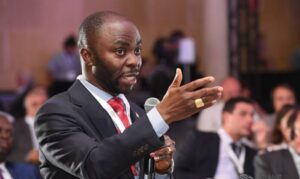
It is important to emphasize that I am not a supporter of Prophet Key.
However, I strongly believe the Court acted improperly in the manner it handled his case. Two wrongs do not make a right.
Why would the Chief Justice, who appeared to be personally aggrieved, preside over the matter? Does that not raise concerns under Judicial Canon 28 regarding impartiality and recusal?
After ordering Prophet Key jailed in such a manner, will the Chief Justice now address the substantive allegations raised against him? For instance, Prophet Key accused him of operating a private hotel business in Nimba, allegedly contrary to Section 13.4(2) of the Judiciary Law and Article 76 of the Constitution. These are serious claims that deserve transparency.
Furthermore, in light of these developments, what is the Chief Justice’s position regarding Judicial Canon 16? What’s about the Abdullai Kamara Act of Press Freedom?
Is this not the same Chief Justice who was accused of undermining ethical standards by allegedly influencing the appointment of his son as magistrate? Where is equity in this matter?
This government is engaged in hideous hypocrisy. When officials of the government insult others, it’s ok, but when the reverse occurred, then you go to jail.
As a matter of fact, the government emboldened the man to go on a cussing spree when it prematurely dismissed Julie’s case against him.
We are now in Marvin Gaye’s territory of what’s going on. It doesn’t seem right, brother.

