

By Dagbayonoh Kiah Nyanfore
This paper discusses the recent territorial crisis between Liberia and Guinea. The article provides background and analyzes historical factors, including diplomatic and legal options.
BACKGROUND
Guinea and Liberia are West African neighboring countries. Modern Guinea emerged in 1958, when the country gained independence from France. Liberia gained its independence in 1847 from the American Colonization Society (ACS), which brought enslaved Black Americans to the country in the early 1820s. While the first American settlers acquired the land by force from the African natives, the Berlin Conference of 1884-1885 determined Guinea’s territorial boundary.
The conference gathered 14 European countries, which divided Africa among themselves. For instance, France took Guinea, the Ivory Coast, and other African countries, while Great Britain took Sierra Leone, Ghana, Nigeria, and others. To indicate the boundary line, the colonialists set up cornerstones to mark their possessions. The Liberia-Guinea boundary is about 350 miles long, including the Mani, Nianda, and Makona rivers.
Although African countries gained independence, particularly in the 1960s, the colonial boundaries remained intact. Liberia became independent before the conference. Moreover, although the colonialists recognized Liberia’s independence and sovereignty, the country failed to protect its territory and thus became vulnerable. Why?
As my book “Victory over Difficulties” discusses, Liberia, as a Commonwealth, faced a crucial financial crisis and needed urgent funds. It depended on taxes from the native and foreign traders along the coast. Britain and France refused to pay the Commonwealth government through the ACS. Britain argued that the ACS lacked the authority to tax.
However, Britain advised and encouraged the Commonwealth to seek independence. Hence, the government declared independence from the ACS peacefully. Britain became the first nation to recognize Liberia’s independence. France followed. In part, in return for the recognition, Liberia ceded parts of its territories near Sierra Leone and Guinea to Britain and France, respectively. It also relinquished its Southeast land to France.
Though subsequent Liberian authorities attempted to settle boundary disputes with Sierra Leone and Guinea under colonial rule, the issue was not properly addressed. Guinea became independent in 1958. Sierra Leone followed in 1961. As independent nations, the three countries have not officially discussed the issue. But in 2024, the Guinean military invaded the Liberian territory of Rayudu and removed the Liberian flag. Observers considered the exercise a continual display of Guinea’s action at Yenga in Sierra Leone.
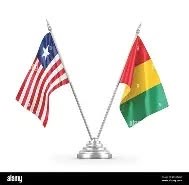
On March 2, 2026, Guinean soldiers crossed the Monakun River into Liberia, removed the Liberian flag, replaced it with the Guinean flag, and seized equipment belonging to BK Enterprise, a Liberian company. The Guinean authority claimed that the territory is theirs, and the company was engaged in, or attempting to engage in, gold and diamond extraction, in addition to sand mining.
Angry Liberian youth responded by removing the Guinean flag and returning the Liberian flag. The incident created tension, prompting diplomatic meetings between the two countries. The crisis has calmed down now. Nevertheless, it has created border and territorial insecurity in Liberia.
ANALYSIS
It is imperative to discuss three factors. One, was Guinea right to encroach into Liberian territory? Two, what are the capabilities of both countries? And third, what are the best ways to resolve the conflict and create a durable peace that would not repeat the crisis?
Some viewers maintained that the contested area belongs to Guinea and therefore the country had the right to claim the territory. They pointed to historical evidence, specifically the cornerstone on the land after the Berlin Conference. As a document shows, Guinea’s current “boundaries were determined by the Berlin Conference”. Moreover, “the cornerstone dated after the conference signified more than a simple foundation marker. It represents a ceremonial and legal assertion of authority in a contested area, reflecting the wider European practice of using a symbolic structure established effective occupation”, according to the Berlin Conference principles.
Supporting viewers argued that regarding Lofa County, “the presence of the cornerstone underlines historical claims to the territory, providing a tangible reference point in the chronology of territorial disputes influenced by 19th-century colonial framework”.
The marker inscribed on the cornerstone reads “Service Geographique de L’A.O.C Point Geodesique was said to have been a reference used to measure land coordination during the French colonial period. However, other analysts indicate that even if the evidence is true, Guinea acted wrongly by disrespecting and violating Liberian sovereignty and territorial integrity. They maintain that Guinea should have approached the issue diplomatically rather than resorting to force. Some Liberians in the area pointed out that the cornerstone “does not reflect the traditional boundary recognized by communities who have farmed the area for generations”. Further, a few Liberians agreed with Guinea.
For example, District 10 Representative Yekeh Kolubah indicated that the land belongs to Guinea. But many Liberians considered his expression reckless and have called for his suppression or expulsion from the legislature. While many analysts consider the Berlin Conference the main factor in African boundary problems, Liberia, France, and Britain should also be held accountable for Liberia’s border issues. 8 years after the conference, France seized territory in Liberia between San Pedro and the Cavalla River in 1892. That land became part of the Ivory Coast upon independence.
On December 8 of that year, Liberia signed a treaty with France, officially giving the land to France. Several years later, Liberia signed two additional treaties with France in 1907 and 1911. In the 1907 agreement, Liberia ceded its Northeastern territory to France. That land is now part of Guinea. Liberia also promised to protect its territories to prevent foreign encroachment. Failure to do so will give France the right to do it for Liberia and possibly take control. The 1911 treaty corrected issues developed in the 1907 agreement. France’s threat or warning led Liberia to establish the Liberian Frontier Force (LFF) in 1908.
Unfortunately, instead of using the LFF for national defense and territorial protection, the Arthur Barclay government and subsequent administrations used it to collect government taxes, fight native rebellions, and protect the Americo-Liberian ruling elite. ‘The government did not pay the army regularly. Hence, when the soldiers did not take pay, they looted the natives’ belongings. “At the same time, the government denied the natives voting rights” until 1946. (Dagbayonoh Nyanfore, 2026)
In addition to France taking Liberian land, Britain seized Liberian territory occupied by Sierra Leone. Liberian tribes live in both countries. In fact, while the Kru officially reside in Liberia, they lived in Sierra Leone before the enslaved Blacks settled in Sierra Leone in 1820. Also, the Mandingos live in Guinea and Liberia.In his pioneering surveys in the 1860s and 1870s, Liberia’s famous explorer Benjamin J.K. Anderson noted and documented the importance of the Liberian interior, highlighting the Mandingo City of Musardu and advising the government to prioritize the hinterland.
About 55 years later, President Daniel Howard’s administration in the 1915s, the military penetrated and defeated the Bong, Lofa, and Nimba territories, thanks to Madam Nye Suakoko, a Kpelle heroine and great leader. The government made her a paramount chief after compromising with the authority.
In other words, the government used the soldiers to fight native people and control their territories. Syrulwa Somah indicated that the government failed to establish schools, healthcare, and other institutions that would have served and bettered the people and the interior. Missionaries and foreign charity organizations helped establish schools and healthcare services in the hinterland.
David Menior of the Liberian Investigation effectively discussed Liberia’s unpreparedness for national defense and territorial security. Sylvester Moses, a former national security boss under Samuel Doe, shared his experience and offered advice on territorial security. Smith Nugba, an average Liberian, spoke in a common Liberian language in a recent Facebook podcast about the country’s defense limitations. He exclaimed that the AFL is incapable of protecting Liberia against Guinea, noting the military inadequacy.
Menior observed the problem from the former President Ellen Johnson Sirleaf administration to the President Joseph Boakai administration. He classified Sirleaf’s presidency as rebuilding the country without a standard army. She dismantled the Armed Forces of Liberia (AFL) and replaced them with an inadequate military headed by a foreigner. Past President George Weah implemented “stability without strategy”. While Weah constructed the 14th Military Hospital, Menior indicated that Weah failed to “significantly strengthen Liberia’s defense capabilities”
According to Menior, Boakai implements diplomacy under pressure. Despite Boakai’s numerous public service experiences, Menior remarked that Boakai has done little to improve the armed forces. Though Boakai has exercised diplomacy in the border crisis, the dispute is a test of his leadership regarding national defense and security.
Moses counseled the Doe government. He called for a better security structure, particularly by strengthening the borders. However, the advice fell on death ears.
The problem with the Liberian military goes back 100 years. The AFL began in 1956 after the LFF changed. Tubman had just won the 1955 election against the Independent True Whip Party (ITWP), a breakaway group of the True Whip Party.
His government had used the military in the killing of ITWP Chairman David Coleman and his son John. The AFL was to prevent future political opposition. Consequently, Tubman had no opposition after 55. He died in office in 1971. President Charles King and Edwin Barclay, before Tubman, used the military to suppress the opposition and maintain the True Whip Party. Under William Tolbert, Liberia had an ineffective military. Under the Guinea-Liberia defense pact, the government called on Guinea to send soldiers to defend the state during the Rice Riot in 1979.
A few months later, Liberian Foreign Minister Cecil Dennis appealed to the US through Secretary of State Cyrus Vance for military assistance to protect the country. (Cecil Dennis’ Communication to Cyrus Vance, 1979) About a year later, uncommissioned soldiers under Samuel Doe’s leadership overthrew the government. In addition to other complaints, the coup makers complained of poor military conditions and neglect of national security.
Regrettably, under Doe, the borders were less protected. The lack of proper border controls enabled Quiwonpah’s insurgent group to pass through Sierra Leone and Charles Taylor to evade Liberia through the Ivorian border. Liberia has yet to seriously protect its borders and upgrade its defense and military apparatus.
GUINEA AND LIBERIA MILITARY COMPARISON
The years of national independence are meaningless when a nation is unable to defend its territory and its people. It must also be able to feed its population and improve their conditions. While nations are equal regardless of size and possessions, they relate to one another based on their interest, military and economic strengths.
Powerful nations tend to take advantage of lesser ones, as the Berlin Conference demonstrated and subsequent treaties between France and Liberia show. France felt that Liberia was defenseless and therefore took liberty of the condition. Britain felt and did the same. They were colonial powers, and Africa was their prize.
Likewise, representatives of the ACS took the natives’ land by gunpoint. The settlers felt that the natives were uncivilized and inferior and therefore took advantage of them. Karma! (Robert Kappel, 1980; Monday Akpan, 1986; and Monday Abasiatta, 1987). America used the same view, under the Manifest Destiny Doctrine, to remove the Native American Indians from their land. The doctrine holds that God destined America to rule over others.
The following discussion examines Guinea and Liberia’s military capabilities to determine their strengths.
Guinea’s military manpower is estimated at 12,000-40,000. It has diversified military equipment and capabilities, including the army, navy, and air force. Its defense focus consists of conventional and regional defense and warfare. Moreover, it ranks first among the military forces of the Mano River Union Region. (Data from various sources)
In contrast, Liberia has a military manpower of about 2,000-7600. Liberia has light conventional capabilities and focuses on internal security. Further, though the country relies on US military training, Liberia has limited armored vehicles and a small coast guard fleet for maritime patrol, and is ranked lowest militarily in the Mano River Region. (Ibid)
In addition to military superiority, Guinea is economically better off than Liberia. Guinea’s GDP is about $25 billion, and GDP per capita is $4,565. The total population is estimated at 14.37 million. Further, “the population enjoys relatively higher average income and purchasing power”. The country has a lower debt-to-GDP ratio of 35.1%.
About two years ago, the government spent $4.36 billion (17.6% of the DGP). The country is heavily reliant on iron ore and bauxite mining. It larger mineral base gives it a bigger external position. Nevertheless, Guinea’s unemployment rate is about 5.2% in 2025. In that year, approximate 66% of the population lived below the poverty level. (Ibid
On the other hand, Liberia’s DGP is estimated at $4.78 billion, 4.02%; DGP per capita is $1.871. Debt-to-DGP ratio is 55.6%. Two years ago, the government spent $1.05 billion (22.1% of the DGP). While Liberia has a long-standing iron ore export, Guinea has a better position primarily because of its bauxite export.
Moreover, Liberia’s population is about 5.6 million, the smallest in the region. Yet, with good soil and numerous natural resources, the country is finding it difficult to feed itself. It imports most basic foodstuffs, including bitter balls and rice. The average Liberian spends about $7.67 daily on food. Over 6 years ago, the amount was $1.25. Thus, costs have increased significantly, while income has remained constant.
Liberia’s unemployment rate in 2025 is approximately 2.88%, while the national poverty rate is about 30% that year, a slight decrease from 34.2% in 2023. In 2016, over 50% of the population lived below the national poverty level. (Ibid)
Despite the economic disparity, the above military statistics indicate that in a battle competition with Guinea, Liberia will perform poorly. Hence, an amicable resolution of the conflict would be preferable.
POSSIBLE RESOLUTIONS
Diplomacy is usually the best way to discuss and resolve a dispute between nations. Hence, many experts have recommended that the Mano River Union, ECOWAS, and the African Union be called upon to settle the dispute. However, other professionals recommend differently. For instance, Ambassador Monie Captan, a former Foreign Minister of Liberia under Charles Taylor’s presidency, views the conflict as a legal matter rather than a political one.
He made his assessment after French President Emmanuel Macron refused to accept President Boakai’s request for Macron to look into the matter. Captan believes that the International Court of Justice can, upon legal review, historical research, and documentation, settle the case once and for all and possibly prevent future conflict.
Macron’s refusal could come from his intention not to interfere in the internal conflict between Liberia and Guinea, particularly between Liberian President Boakai and Guinean former military leader and now civilian President Mamady Doumbouya. Doumbouya came to power after overthrowing Alpha Conde in 2021.
Doumbouya ran for president in 2025 and won by a landslide. Seemingly, the relationship between the Doumbouya government and Paris has not been cordial. Conde was president for 11 years with a good relationship with France. Guineans ran into the streets for his overthrow.
They see Doumbouya as a change. A new and young leader tends to be strong, different, and patriotic. When Guinea gained independence under Sekou Toure, France removed all the infrastructure it had brought to the country, including telephone poles. Toure, a trade unionist, was young and a Pan-Africanist Progressive. He died in office.
Counselor Tiawan Gongloe, the political leader of the Liberian People’s Party (LPP), believes that before involving an extender institution in the matter, President Boakai’s administration should conduct an investigation into the crisis. “Something got to start the conflict”, he said, adding that perhaps some officials may have been involved in an unlawful gold and diamond mining.
“It is against international law to engage in an illegal activity in a common shared area without the consent of the others”, he pointed out. He recalled that Liberia and Guinea have been peaceful neighbors, reflecting years of friendship and solidarity.
The accusation of illegal mining raises the question: why did BK Enterprise engage in sand mining directly? Why did the company, a professional road construction business, not subcontract the sand mining portion and focus on construction? Mr. Boakai Kollie, the company CEO, started the construction business in 2018. He should not have been involved in mining.
An analyst supported Gongloe’s call for an investigation, stating that the Guinean troops would not have, from the blue sky, moved into Liberian territory, seized equipment, and installed their flag. Something had to prompt the action. “A detailed investigation should unearth the truth. That should be done first”, he added.
Whether to pursue diplomacy, an investigation, or a legal approach first, Liberia and Guinea should seriously address and resolve the problem. If not, the matter could recur, leading to a sustained, unfriendly relationship that could affect commercial activities and ethnically related groups in both countries.
About the author: Dagbayonoh Kiah Nyanfore II, a student of international affairs, is a historian and political commentator. He graduated from the Edmund Walsh School of Foreign Service at Georgetown University, majoring in international relations. He has written and published extensively.

