

By H. Matthew Turray
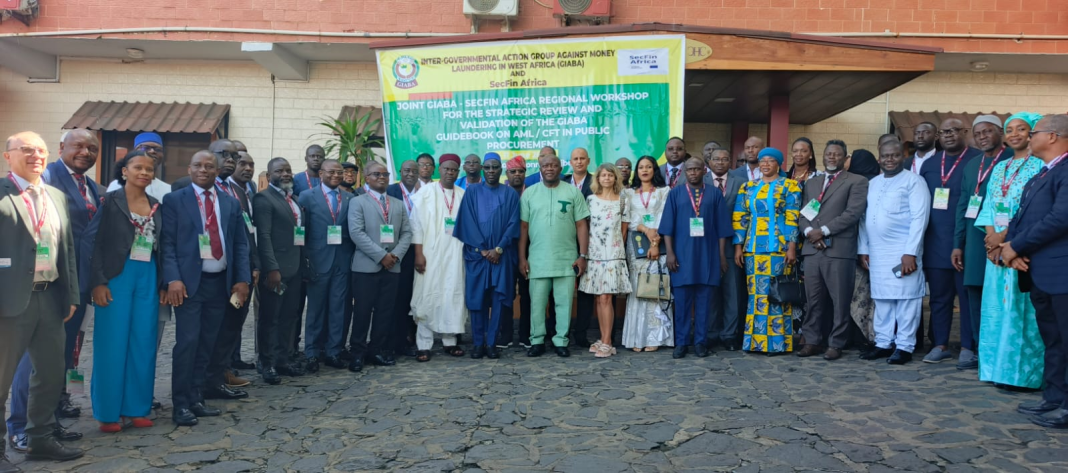
A thunderous alarm has been sounded across West Africa as leaders, auditors, and financial watchdogs converge in Monrovia to confront a staggering crisis: the hemorrhaging of USD 50 billion annually through procurement-linked illicit financial flows. The Intergovernmental Action Group against Money Laundering in West Africa (GIABA) launched a four-day regional workshop on Monday, June 8, 2026, unveiling a groundbreaking Procurement Guidebook designed to choke off one of the most dangerous pipelines of corruption.
GIABA Director General Edwin W. Harris did not mince words. “Public procurement is one of the most vulnerable corridors for illicit financial flows in West Africa,” he declared, warning that the sheer scale of procurement—accounting for nearly 12% of GDP across member states—has turned it into a magnet for criminal exploitation.
Harris painted a grim picture: opaque processes, weak oversight, and endemic corruption have created fertile ground for fraud, money laundering, and shell companies that siphon resources meant for schools, hospitals, and roads. “Criminals manipulate tender processes, split contracts, inflate invoices, and launder illicit proceeds through streams that appear legitimate,” he said. “The very systems designed to build our future are being weaponized to enrich a few. This is unacceptable.”
The numbers are chilling. The USD 50 billion lost annually dwarfs the total development aid flowing into the region. Harris emphasized that procurement systems have become the preferred channel for laundering illicit funds, undermining governance and crippling essential services. The new Guidebook, he explained, is a regionally owned technical reference that equips states to detect, prevent, and respond to money laundering risks at every stage—from planning and tendering to contract management and payment.
The Guidebook’s arsenal includes enhanced due diligence, beneficial ownership transparency, integrity screening, and stronger inter-agency coordination. Technology, Harris stressed, will be a gamechanger: “E-procurement systems can improve transparency, traceability, oversight, and accountability.” He urged participants to validate typologies of procurement-related crime, develop a shared glossary of red flags, and design referral pathways linking procurement authorities, financial intelligence units, auditors, and parliamentary committees. “Opacity in procurement must no longer be a safe harbor for money laundering,” he thundered.
The urgency was echoed by Dr. Anna Brzozowska of the European Union Delegation to Liberia, speaking on behalf of SecFin Africa and Team Europe. “Safeguarding procurement integrity is not merely a governance issue—it is a prerequisite for sustainable development,” she warned. Procurement, she noted, is the most visible way citizens experience government. When manipulated, it erodes trust, distorts competition, discourages investment, and diverts resources from development priorities.
Liberia’s Finance Minister Augustine Kpehe Ngafuan underscored the stakes. Procurement, he said, is inseparable from public trust, fiscal discipline, and sustainable development. Yet without safeguards, it becomes fertile ground for corruption, fraud, and even terrorist financing. “When procurement systems are compromised, schools, hospitals, roads, and security services suffer,” he lamented, commending GIABA for arming member states with a practical tool to fight back.
The Monrovia workshop marks the culmination of years of effort to produce a regionally owned anti-money laundering and counter-terrorist financing guidebook tailored to procurement. Delegates from across West Africa—including auditors, procurement authorities, and financial intelligence units—are expected to formally adopt the Guidebook and agree on a binding roadmap for implementation by Thursday.
The stakes could not be higher. As Harris reminded participants, oversight without enforcement is meaningless, and audits without follow-up are hollow. “Red flags must translate into intelligence reports, investigations, prosecutions, asset seizures, and confiscations,” he said.
For West Africa, the battle against procurement-linked illicit flows is no longer an abstract policy debate—it is a war for survival. With USD 50 billion vanishing each year, the region faces a choice: continue bleeding resources into the shadows or rise with resolve to reclaim its future. The Monrovia workshop may well be remembered as the moment West Africa drew a line in the sand, declaring that corruption will no longer dictate the destiny of its people.

