

A storm of controversy is sweeping through Gbarquoista Community after the Bondi Mandingo Community Forest signed a new logging concession with Kisvan Timber Corporation, creating g bitter memories of broken promises and abandoned timber left rotting in the bush.
The community’s skepticism is rooted in its painful experience with Indo Africa Plantation Liberia Limited, which secured a 37,222‑hectare concession in 2018. Residents recall grand pledges of clinics, schools, scholarships, and road repairs — promises that largely evaporated.
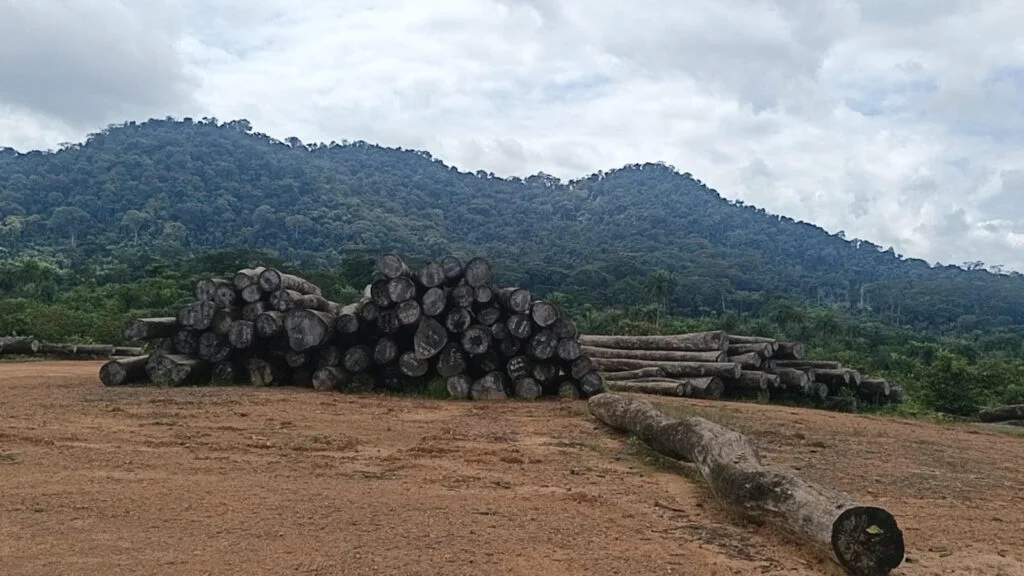
Records show Indo Africa harvested 7,183 logs after delaying operations until late 2021. Yet many of those logs remain abandoned deep in the forest, a haunting reminder of unmet obligations.
“They came, felled the logs, and left them to waste,” lamented citizen Peter S. Y. Donor. “They did not live up to the agreement.”
Community members are now demanding stronger control over their forest’s future. Padmore Sumo Dumah urged that other towns share the burden: “Let another town be used. We are not the only ones. Take the old logs, but if they want new ones, let them go elsewhere.”
Youth Chairman Morris K. Talawalay delivered an even sharper rebuke: “We do not want any new logs cut from our forest again. If they proceed, we will consider legal action.”
Traditional midwife Kluba Kollie painted a vivid picture of the devastation: “If you walk into that bush, you will see the trees wasting there. You will feel bad.”
Town leaders, including Assistant Town Chief Junior Gbassey and Development Secretary Kollie Manjoe, echoed these sentiments, insisting that community interests and forest protection must remain central to any future decision.
Despite the chorus of opposition, the Community Forest Management Body (CFMB) signed a fresh agreement with Kisvan Timber Corporation on July 24, 2026, in Farwhenta, under the supervision of the Forestry Development Authority (FDA).
The deal promises tangible benefits: US$25,590 in annual land fees, US$10,000 yearly for scholarships, US$7,000 annually for healthcare, and priority hiring for community members
CFMB Executive Chairman Dinakina S. Gbarnto defended the move, arguing that the community must reap benefits before a potential mining concession encroaches on the area. “The only thing we could do was sign a concession agreement so we can benefit from the logs before that MDA is signed,” he explained.
Gbarnto claimed that more than 90 percent of participants welcomed the new deal during community discussions. He further noted that abandoned logs would be sold in line with a court ruling, with proceeds distributed among former workers, the community, a bank, and government taxes.
“We will welcome these concerns and explain to residents to ensure they are well informed,” he said.
The clash between economic opportunity and environmental stewardship has left Gbarquoista deeply divided. On one side, the CFMB insists the new deal is a pragmatic step to secure revenue and services. On the other, residents fear history will repeat itself — promises unfulfilled, forests scarred, and livelihoods compromised.
The abandoned logs stand as mute witnesses to past failures, fueling distrust and resistance. For many, the forest is more than timber; it is heritage, livelihood, and identity.
As Gbarpolu braces for another round of logging, the question looms: will Kisvan Timber Corporation deliver where Indo Africa faltered, or will the community once again be left with empty promises and wasted trees?
For now, the people of Gbarquoista remain vigilant, determined to ensure that their voices — and their forest — are not silenced.

