

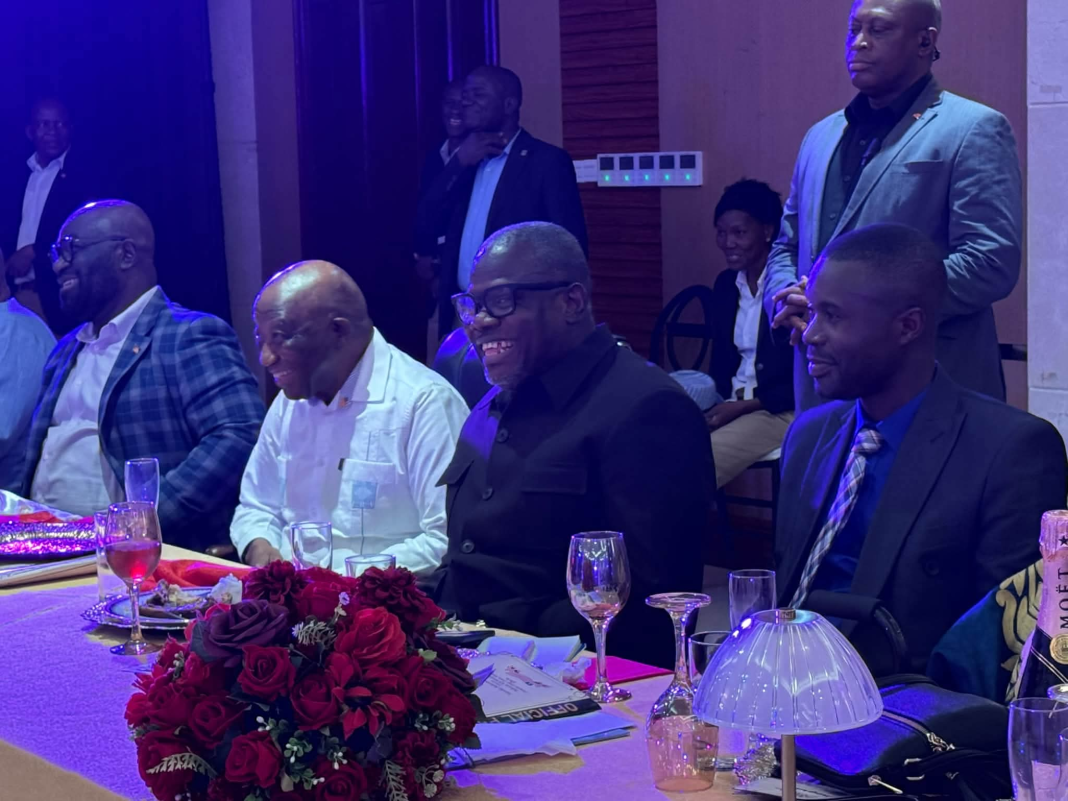
President Joseph Boakai pledged that his administration won’t muzzle or control the media, while urging journalists to balance scrutiny of government with accurate reporting on the country’s progress.
“Government will never take the media to be an institution to be muzzled or controlled,” Boakai said Saturday at the second annual Presidential Media Dinner in Congo Town, Monrovia.
He described the government and the media as institutions with separate responsibilities but a shared obligation to the Liberian people.
Boakai reaffirmed Liberia’s commitment to the Table Mountain Declaration, which supports freedom of expression, access to information and an independent press. He said his administration would remain open and responsive as it implements the ARREST Agenda for Inclusive Development.
The president also encouraged journalists to report Liberia’s challenges while highlighting the country’s resilience and potential, saying the way Liberia is portrayed can influence international investment and the nation’s reputation.
“Being positive does not mean ignoring our challenges,” Boakai said. “It means that, even as we report what is wrong, we must also, with equal measure of honesty, tell the world what is right.”
He urged media organizations to uphold accuracy, fairness, professionalism and the public interest, while pledging to strengthen the relationship between government and the Fourth Estate.
The dinner was also used to press the government for stronger support for the media industry.
Julius Kanubah, president of the Press Union of Liberia, called for the creation of a Liberia Media Governance and Sustainability Act to establish a national framework for supporting independent and professional journalism.
Kanubah said the media sector continues to face declining revenues, unreliable electricity, inadequate equipment, high operating costs and limited access to professional training. Community radio stations, he said, remain particularly vulnerable.
He also criticized the lack of substantial progress on reforming the Liberia Broadcasting System into an impartial public-service broadcaster and on improving working conditions for journalists.
“More than a year later, we are yet to see significant progress toward comprehensive ELBC reform, structured support for community radio, improved working conditions for journalists, or a national framework for media sustainability,” Kanubah said.
The PUL president asked Boakai to support construction of the union’s headquarters, which is intended to serve as a center for press freedom, professional development and journalist protection.
Kanubah also referred to a previous $100,000 contribution to the PUL headquarters project under former President Ellen Johnson Sirleaf, describing the handling of the funds as a source of continuing accountability concerns. Despite that history, he said the union remains committed to transparency and completing the facility.
Information Minister Piah used the event to warn journalists and media houses against publishing unverified information, particularly on Facebook, WhatsApp and other digital platforms.
Piah said the government would protect press freedom and that “no journalist will be censored,” arbitrarily detained or targeted because of an editorial position. He also said no media institution would be shut down for its stance.
But he cautioned that inaccurate reporting could damage reputations, create public fear and undermine confidence in the media and democratic institutions.
“Every journalist should therefore ask before publishing: Is this information true? Have I verified it? Is it fair? And what could happen if I am wrong?” Piah said.

