

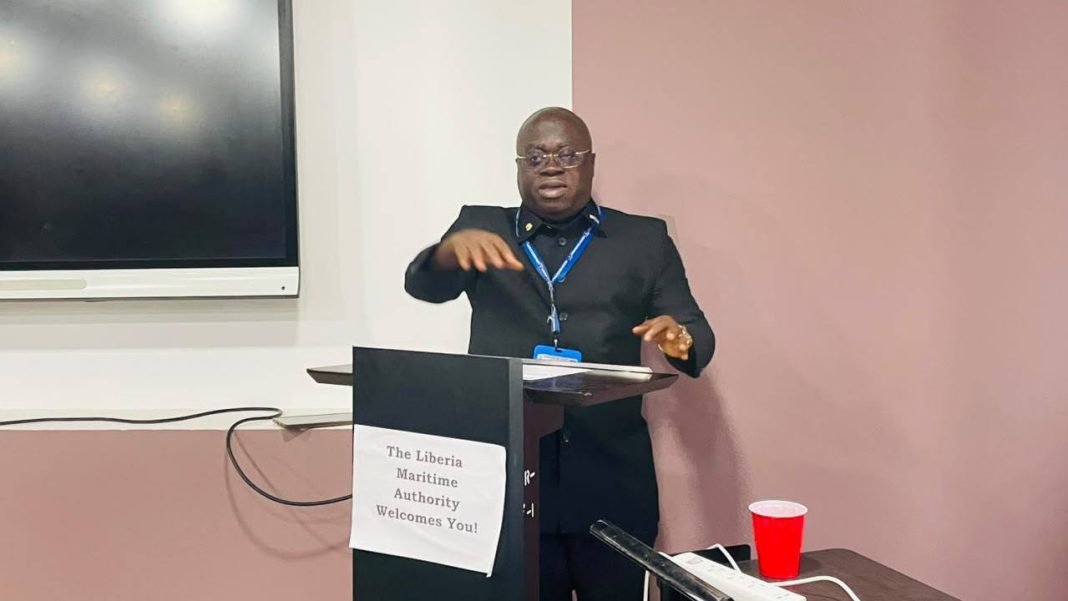
The Liberia Maritime Authority (LiMA) has welcomed a high-level delegation from the Kingdom of Eswatini for a weeklong working visit aimed at strengthening institutional cooperation and sharing technical expertise as the Southern African nation moves to establish its Maritime Authority and Ship Registry.
The visit provides a platform for Eswatini officials to gain firsthand insight into Liberia’s globally recognized maritime program, with discussions focused on ship registration, maritime safety, regulatory compliance, institutional development, and international best practices in maritime administration.
Speaking at the opening of the engagement, LiMA’s Director of International Affairs, Atty. Darlington Duoe, underscored the importance of the visit, expressing confidence that the exchange would yield practical outcomes and deepen collaboration between the two countries.
He noted that the knowledge-sharing initiative reflects Liberia’s commitment to supporting emerging maritime nations while fostering stronger diplomatic and institutional ties across Africa.
Delivering special remarks, LiMA’s Deputy Commissioner for Domestic Vessel Registration and Safety, John F. Harvey Jr., highlighted Liberia’s long-standing status as a leading player in the global shipping industry. He said the country’s success in developing one of the world’s most respected ship registries was built through careful planning, sustained investment, and strict adherence to international maritime standards.
According to Harvey, Liberia’s achievements were the result of decades of institutional growth rather than short-term efforts. He emphasized that credibility within the international maritime sector depends not only on establishing a ship registry but also on maintaining robust regulatory systems, effective enforcement mechanisms, and unwavering compliance with international conventions and standards.
“Building a successful maritime program requires commitment, discipline, and a regulatory framework capable of meeting the expectations of the global shipping community,” he noted.
Harvey further stressed that strong governance and consistent oversight remain essential for countries seeking to establish a reputable presence in the maritime industry.
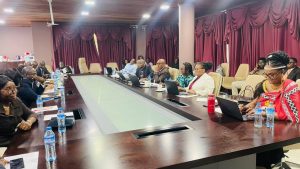
Leading the Eswatini delegation, Mr. Thulani Mkhaliphi described the visit as a significant learning opportunity for his country, which is seeking to diversify its economic prospects by exploring opportunities within the maritime sector.
“Eswatini is a small country, but its size has not hindered our ambitious dream to venture into the maritime sector. We are novices in this sector, which is why we are excited about the opportunity this working visit provides,” Mkhaliphi said.
He expressed appreciation to LiMA for opening its doors to the delegation and providing direct access to experienced maritime professionals. According to him, the depth of expertise available throughout the engagement has made the visit particularly valuable.
“We are here to understand the legal, technical, and human resource requirements for building a responsible and vibrant maritime sector that would complement our existing ambitious economic programs as a small nation sandwiched between South Africa and Mozambique,” he added.
His remarks reflected Eswatini’s broader ambition to establish the institutional and regulatory foundations necessary to participate meaningfully in the international maritime industry while aligning maritime development with national economic growth strategies.
As part of the visit, LiMA officials provided detailed presentations on Liberia’s maritime evolution and the factors that have contributed to the country’s international maritime success.
Among the presenters was Mr. Desire Satia, Deputy Chief Financial Officer of LiMA, who delivered a historical overview of Liberia’s maritime program dating back to the 1940s. His presentation highlighted key policy decisions, strategic reforms, and institutional milestones that helped transform Liberia into the world’s largest ship registry by gross tonnage.
Satia outlined the lessons learned from decades of maritime administration and explained how sustained policy consistency, international partnerships, and regulatory discipline have strengthened Liberia’s competitive position in global shipping.
The presentation offered the Eswatini delegation an in-depth understanding of the historical, financial, and administrative frameworks that have guided Liberia’s maritime development over the years.
Beyond sharing historical perspectives, the working visit has also created an opportunity for both countries to examine the legal, financial, administrative, and technical requirements associated with establishing and managing a modern maritime authority and ship registry.
For Eswatini, the engagement is expected to provide valuable guidance on institutional design, regulatory development, workforce capacity building, and the responsibilities that accompany participation in international shipping and maritime governance.
Liberia’s maritime experience is increasingly viewed as a practical model for countries seeking to develop maritime institutions capable of meeting global standards. Its success offers insights into effective governance, regulatory oversight, compliance with international conventions, and collaboration with international maritime stakeholders.
The ongoing exchange underscores the growing importance of South-South cooperation and the role of knowledge sharing in strengthening institutional capacity across Africa. It also highlights LiMA’s emerging role as a source of maritime expertise for countries looking to establish or expand their maritime sectors.
As discussions continue throughout the week, both Liberia and Eswatini are expected to identify new avenues for cooperation in maritime administration, technical capacity development, and the promotion of responsible participation in the global shipping industry, further strengthening ties between the two nations.

