

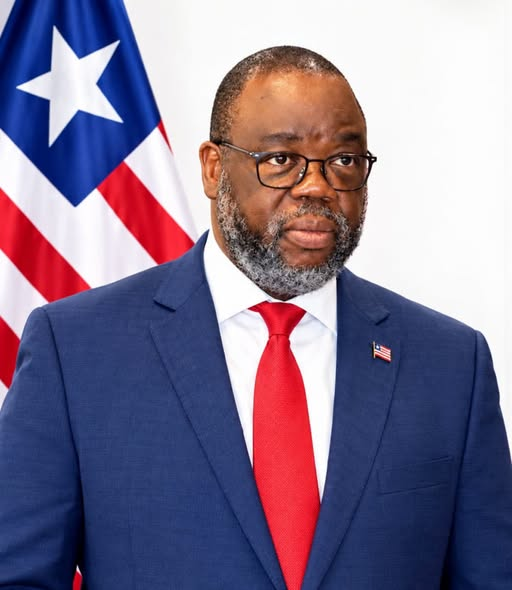
By E. J. Nathaniel Daygbor
Bomi County Senator Edwin Melvin Snowe Jr. has pushed back against growing calls to abolish jury trials in Liberia, arguing that the nation should instead pursue comprehensive reforms to strengthen the jury system while safeguarding constitutional rights and the integrity of the justice sector.
In a detailed contribution to the national debate sparked by Chief Justice Yamie Quiqui Gbeisay Sr.’s proposal to eliminate jury trials, Snowe said corruption and misconduct within the justice system should be confronted through accountability and institutional reforms rather than by stripping citizens of constitutional protections.
Drawing on more than two decades of legislative experience, the senator stressed that while he is not a lawyer, he is among the 103 lawmakers constitutionally mandated to enact laws and defend Liberia’s Constitution.
“The concerns raised about jury trials deserve serious national attention and debate,” Snowe said, emphasizing that discussions must remain free from partisan interests and focus squarely on justice, fairness, and the protection of citizens’ rights.
He acknowledged persistent concerns about bribery, intimidation, interference, and misconduct within the judicial process, noting that such practices undermine public confidence in the courts and threaten the credibility of the justice system.
While commending Chief Justice Gbeisay’s determination to address those challenges, Snowe argued that the failures of individuals within the system should not be used as justification for abolishing a constitutional right.
“Corruption demands investigation, accountability, and institutional repair,” he maintained. “Its existence does not, by itself, justify withdrawing a fundamental right from the Liberian people.”
Snowe anchored much of his argument in the Constitution, asserting that the right to a jury trial is firmly protected under Liberian law.
He cited Article 20(a), which guarantees due process and the right to trial by jury, and Article 21(h), which provides individuals accused of crimes the right to a speedy, public, and impartial jury trial, subject to limited constitutional exceptions.
According to the senator, Article 2 of the Constitution establishes the supremacy of constitutional provisions over any inconsistent law or official action, making it impossible for jury trials to be abolished through ordinary legislation or judicial directives.
He distinguished between a defendant’s decision to voluntarily waive a jury trial and a nationwide policy eliminating the right altogether.
“An individual waiver exercises a constitutional option. General abolition would remove the underlying right itself,” he argued.
Snowe further noted that any attempt to eliminate constitutionally protected jury trials would require adherence to Liberia’s constitutional amendment process. Under Articles 91 and 92, proposed amendments must secure the support of two-thirds of both Houses of the Legislature and later be ratified by two-thirds of registered voters participating in a referendum.
Such requirements, he said, exist to ensure that fundamental constitutional changes receive broad public scrutiny and consent.
Snowe warned that abolishing jury trials would not automatically eliminate corruption or improper influence within the justice system.
If the concern is undue influence over verdicts, he argued, shifting the responsibility for determining facts exclusively to judges could simply redirect efforts by corrupt actors toward influencing other participants in the judicial process.
“Judges, prosecutors, investigators, court personnel, and witnesses all require protection from bribery, intimidation, and political pressure,” he said.
Rather than focusing solely on juries, Snowe urged policymakers to examine the entire criminal justice chain, including criminal investigations, evidence preservation, witness protection, prosecution, and trial management.
He also cautioned against treating every acquittal as evidence of jury corruption.
Referencing public discussions surrounding cases involving former Finance Minister Samuel Tweah and Abdullah Kamara, Snowe said verdicts should be evaluated based on evidence and legal standards rather than political sentiment or public disappointment.
“An acquittal may reflect insufficient evidence, unreliable testimony, or a failure to establish guilt,” he stated, adding that allegations of jury interference should be investigated through lawful procedures rather than assumed.
Instead of abolishing jury trials, Snowe advocated a broad reform agenda designed to strengthen public confidence in the system.
He highlighted the Office of Jury Management, established through legislative reforms in 2013, as an institution that should be reviewed and strengthened to improve jury administration and oversight.
Among the reforms he proposed are more transparent jury selection procedures, stronger screening mechanisms to identify conflicts of interest, improved compensation and working conditions for jurors, and enhanced security measures for individuals facing threats or intimidation.
The senator also called for tougher investigations and prosecutions of those who attempt to bribe jurors or otherwise interfere with court proceedings, as well as stronger juror education programs to improve understanding of legal responsibilities and ethical standards.
Additionally, he emphasized the need to improve criminal investigations, witness protection, and prosecutorial preparation to ensure juries are presented with reliable evidence.
To ensure reforms are effective, Snowe proposed regular reporting, legislative oversight, and clear accountability mechanisms tied to funding and implementation.
Snowe concluded by calling for public hearings involving the Judiciary, the Ministry of Justice, the Liberian National Bar Association, civil society organizations, jury administrators, and ordinary citizens who have served on juries.
He said the discussions should focus on identifying weaknesses within the system, evaluating previous reform efforts, and determining practical solutions that can be implemented and sustained.
“The jury provides an important avenue for ordinary citizens to participate directly in the administration of justice,” he said.
Reaffirming his willingness to work with the Chief Justice and fellow lawmakers, Snowe maintained that Liberia could strengthen accountability and combat corruption without sacrificing constitutional rights.
“Let us protect the right, punish those who corrupt it, and give the system the support it needs to work,” he urged.

