

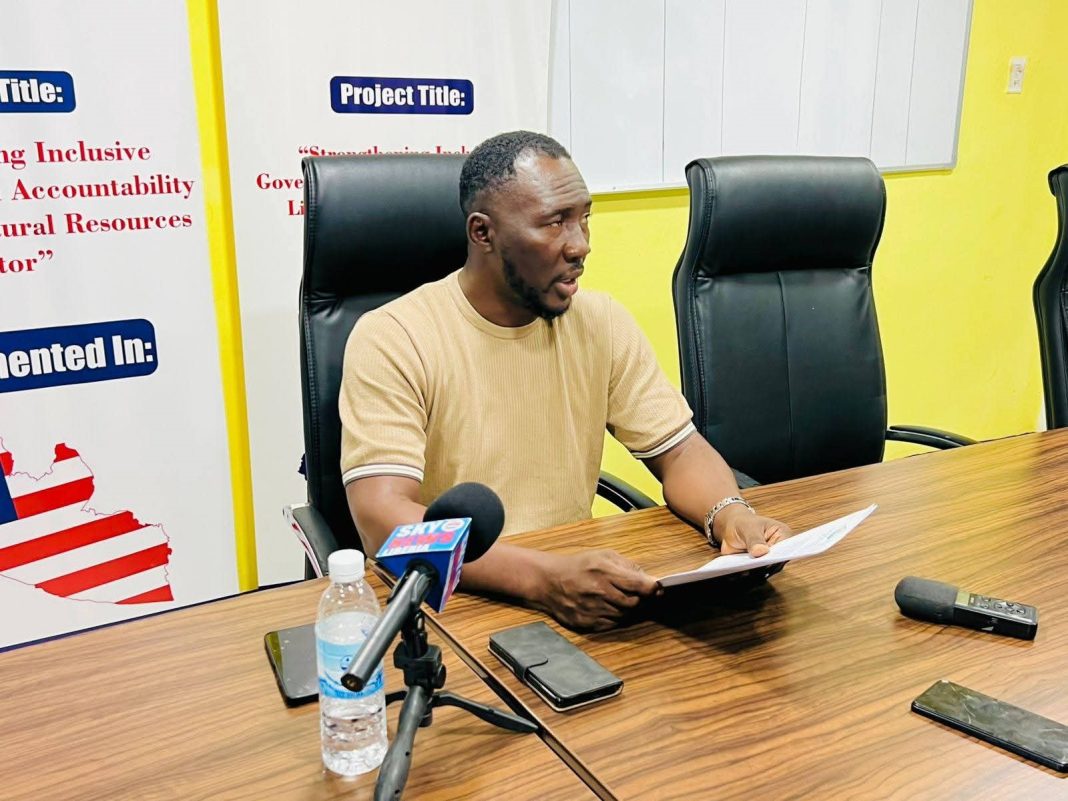
Integrity Watch Liberia (IWL) has issued a stark warning that the country’s artisanal and small-scale mining (ASM) sector is spiraling into a national crisis, fueled by rapid expansion, weak regulation, and mounting environmental destruction.
A recent field monitoring assessment across Gbarpolu and Bong Counties—particularly along the Tuma River Belt and St. Paul River Basin—reveals that artisanal mining is shifting from subsistence activity to mechanized, commercially driven operations. Conducted under the project “Strengthening Inclusive Governance and Accountability in Liberia’s Natural Resources Sector, Phase II,” the study paints a troubling picture of unchecked exploitation.
IWL reports a surge in river-based mining, with dredging machines now operating directly in active channels once relied upon for drinking water, fishing, and household use. Communities are witnessing degraded water quality, sediment disruption, and declining fish populations, undermining traditional livelihoods.
“The environmental footprint of mining activities has expanded significantly,” the report notes, warning that pollution and ecological damage are accelerating at an alarming pace.
The watchdog uncovered widespread violations of Liberia’s mining laws. Mechanized equipment such as suction dredges and pumps are being used under Class C licenses, which legally permit only manual methods. This loophole, IWL argues, exposes a glaring enforcement failure and erodes the credibility of Liberia’s mining governance system.
Beyond environmental harm, the assessment highlights the rise of informal financial systems in mining communities. Miners reportedly make undocumented payments to sustain operations, raising fears of corruption and elite capture. Local oversight remains weak, with accusations that a handful of individuals disproportionately benefit from mining revenues.
IWL warns that the consequences extend far beyond rural communities. Mining along tributaries feeding into the St. Paul River could jeopardize the Mount Coffee Hydropower Plant—Liberia’s flagship electricity source.
“If left unchecked, these practices could disrupt water systems, damage hydropower infrastructure, and result in long-term ecological and economic consequences,” the organization cautioned.
In response, IWL is urging the Government of Liberia—particularly the Ministry of Mines and Energy and the Environmental Protection Agency—to act decisively. Recommendations include; Strict enforcement of mining regulations, establishment of a transparent mining license registry, strengthened environmental monitoring, and improved community-level governance.
The organization further insists on a comprehensive national strategy to formalize the ASM sector, ensuring it contributes to sustainable development while minimizing harm.
Describing the situation as a “defining moment” for Liberia’s extractive industry, IWL stressed that accountability and rule of law are no longer optional.
“Strengthening accountability, enforcing the rule of law, and formalizing the ASM sector are urgent national priorities,” the statement declared.
Integrity Watch Liberia, a civil society organization dedicated to transparency in natural resource governance, says the country must act now to prevent artisanal mining from evolving into an irreversible national disaster.

