

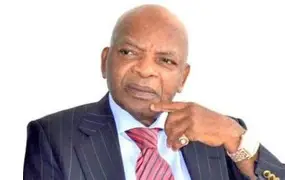
Nigerian oil and gas company that reached deals with Liberian authorities for four offshore oil properties has lost its operating license in Senegal after failing to meet financial commitments.
Nigerian billionaire Arthur Eze’s company, Atlas Oranto Petroleum, secured four offshore exploration blocks in Liberia after lawmakers rectified the agreement in late Dec. 2026.
The company signed production sharing contracts worth a $12 million signature bonus with Liberia promising to invest $200 million per block.
Despite that near-billion –dollar commitment, last Week, Senegal officially took back control of the Cayar Offshore Shallow (COS) block after Oranto Petroleum failed to provide the required financial guarantees to implement its contractual work program.
The West African nation exercised its rights under national petroleum laws to withdraw the license.
In a statement the Ministry of Energy and Petroleum said the decision followed repeated requests to the license holder to provide adequate financial guarantees.
“Despite our letters, the necessary guarantees were not submitted within the allotted period,” the ministry noted.
The ministry explained that the withdrawal followed a detailed legal, technical and regulatory review, assessing compliance with contractual obligations, including financial capacity, work programme execution, and adherence to timelines.
“The absence of financial guarantees justified the reversion of the block to the State,” it added.
Located north of the Dakar peninsula, the COS block forms part of Senegal’s shallow water exploration portfolio.
The block has 13 mapped leads and is estimated to hold several hundred million barrels of oil in place.
The ministry noted that financial guarantees are a key requirement in upstream petroleum contracts.
They ensure license holders can carry out exploration and appraisal activities on schedule.
“Maintaining these requirements protects national interests and reduces delays in resource development,” the statement said.
Officials explained that the decision demonstrates Senegal’s commitment to regulatory enforcement and responsible management of its hydrocarbon resources.
On its part, the ministry said the reacquired block will be evaluated for its development potential. This includes determining technical and financial requirements for future operators.
“Senegal remains open to private sector participation, provided companies demonstrate technical expertise, financial strength, and long-term commitment,” the ministry added.
The COS block is considered oil rich, with individual trap sizes potentially holding several hundred million barrels. By regaining control, Senegal positions itself to ensure exploration and production proceed without further delays.

